
Employee feedback, engagement, channel effectiveness, and adoption lie at the heart of effective internal communications to create value and support business performance. But when do these data points stop being mere data and start driving real business impact? The real challenge is measuring them objectively and at scale. This is where Business Intelligence tools like Microsoft Power BI come in, turning data into insight, and insight into action.
The Goal of Internal Communications
Well-informed employees are more engaged, and engaged employees are far more likely to contribute effectively to the organisation’s success.
Moving Beyond Gut Feeling with Microsoft Power BI
Did the last campaign work? It felt like it did.
Was the town hall successful? People seemed engaged.
Real‑Life Use Cases in Daily Internal Communications
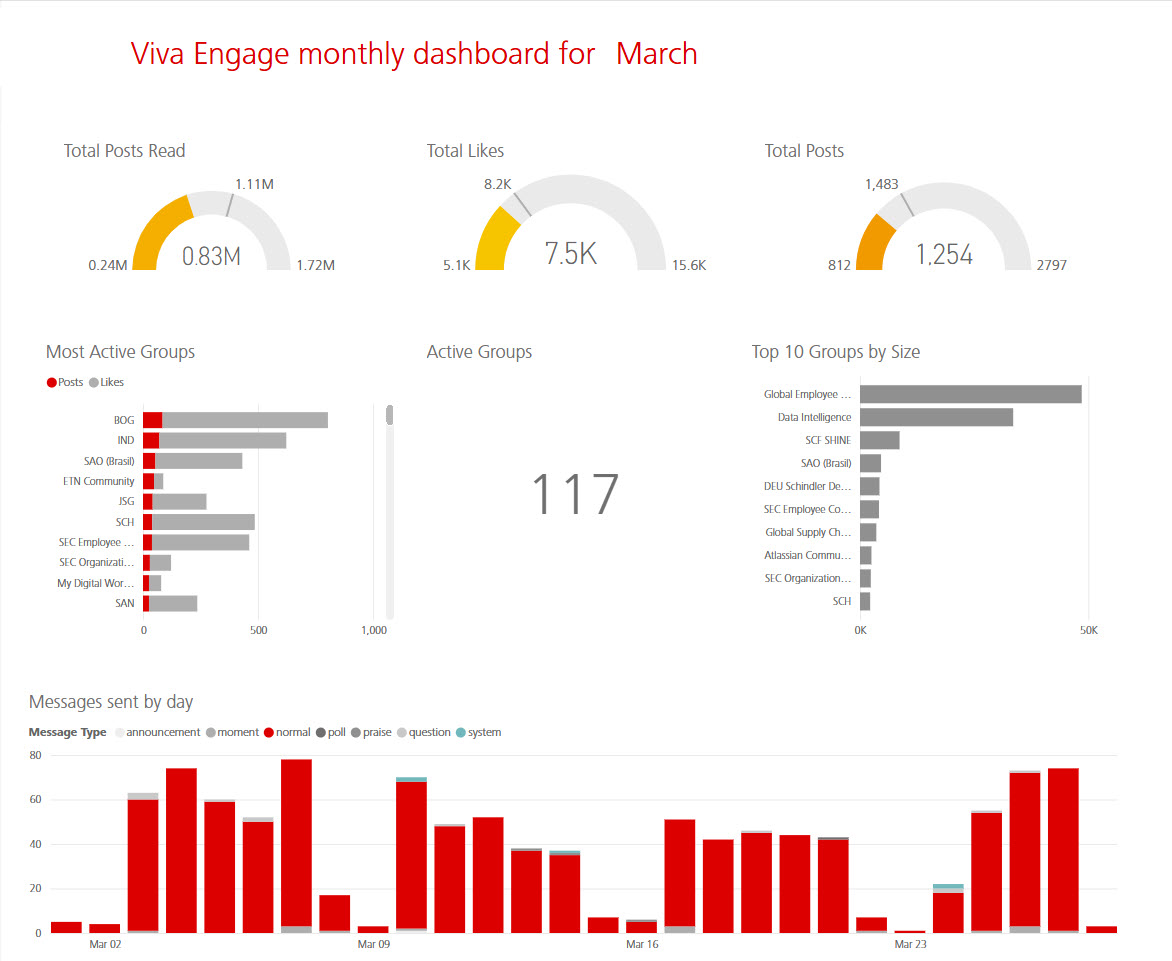
- Data: Active user data, log‑in frequency, content views, interactions (likes, comments, shares), and usage data segmented by location, function, or role
- Metrics: Adoption and active usage rates, frequency of interactions per user, growth over time, and engagement depth across organizational segments
- Outcome: Identify adoption gaps, understand usage patterns, and enable targeted actions (e.g., onboarding, users training, leadership activation) to increase sustainable channel adoption
Campaign effectiveness
- Data: Combine Intranet news views, Viva Engage interactions, and survey feedback
- Metrics: Measure message reach, identify top‑performing channels, and spot engagement drop‑offs
- Outcome: Optimize future campaigns based on evidence rather than assumptions
Leadership communication (e.g. Town Hall) impact
- Data: Town hall attendance, live Q&A participation, post‑event feedback, and follow‑up engagement across channels
- Metrics: Measure participation rates, interaction levels, message reach beyond the live event, and sustained engagement over time
- Outcome: Assess whether leadership messages resonate, identify gaps in understanding, and refine leadership communications based on evidence
Final Thought
When reliable data meet professional judgment, internal communications can shine by moving from guesswork to clarity, credibility, and real impact. The key is to start with clear questions: what do we really want to understand? Form there, focus first on a small set of KPIs that influence behavior and outcomes. Build confidence step by step by connecting existing data, rather than waiting for a perfect setup. Keep dashboards simple, avoid overcomplication. And most importantly, don’t be afraid to get started.
When data brings clarity, internal communications creates real impact.
Perfection isn’t the goal, momentum is.
Still exploring alternatives? There are several BI solutions on the market, and outsourcing analytics can also be a valid option, especially when resources are limited.