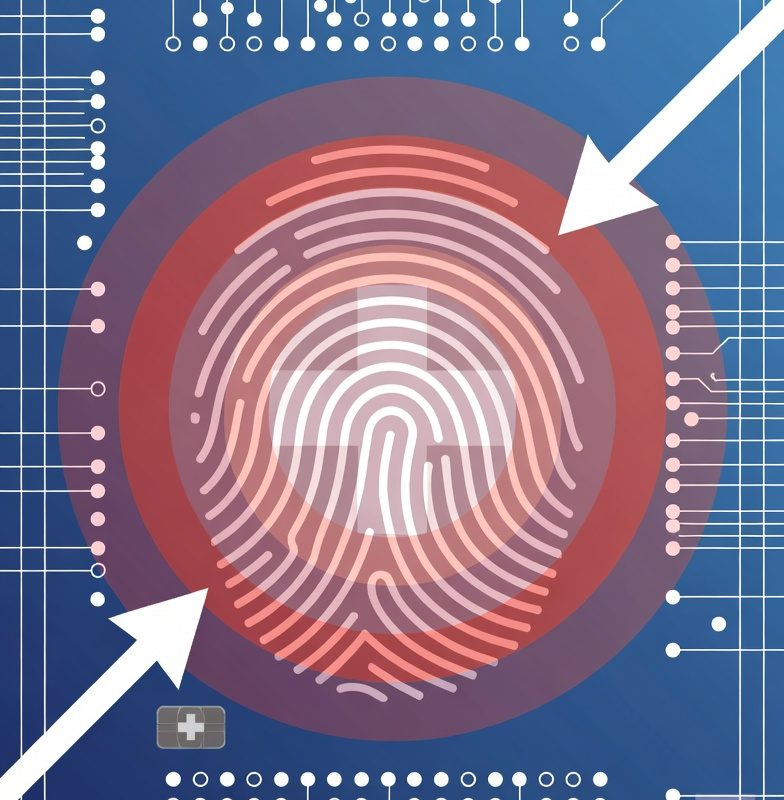
We are suffering from platform fatigue. We are tired of passwords, skeptical of surveillance, and worried about AI blurring the line between human and machine. But while the technical debate focuses on blockchain speeds and wallet standards, the real battle is about something deeper: personhood . Following the razor-thin approval of the Swiss E-ID in 2025, the question is no longer just how we log in, but who owns the digital version of ourselves.
The Crisis of the Digital Persona
Who are you online? Researchers at the RAND Corporation describe a “digital persona” as a version of a person assembled from biometric traces, browsing behavior, and metadata. For years, we accepted that platforms owned this persona. We traded data for convenience.
The cost of that trade is now becoming quantifiable.
-
The Cost of Fatigue: The average digital citizen now manages over 100 distinct accounts . This isn’t just annoying; it is an economic drain. Industry estimates suggest companies lose lose several hundred dollars per employee each year due to password friction and productivity loss.
-
The Fear of „Fake“: With AI-driven deepfakes becoming indistinguishable from reality, proving „humanness“ is a security imperative. Sophisticated identity fraud has seen a staggering 180% increase in just one year, driven by AI agents.
-
The Fear of Surveillance: Swiss voters have long been skeptical of centralized systems. The „digital you“ cannot be safe if it is stored in a honey pot that can be breached or tracked.
This raises a simple but unsettling question: What if the next time you prove you are you, no one needs to see your name at all?
Switzerland’s Bumpy Road to Trust: Enter „Swiyu“
Trust in Switzerland is hard-earned. In 2021, voters rejected a privately operated E-ID by a decisive 64.4%. The message was clear: Core identity must remain under democratic oversight, not corporate control.
The revised, state-run model passed on September 28, 2025, but the mandate was fragile and approved by only 50.4% of voters . This narrow margin is critical. It signals that legitimacy was granted conditionally .
The government’s response is the “Swiyu” wallet (a portmanteau of Swiss and You ), the official Swiss E-ID wallet initiative being rolled out under the revised E-ID Act.
Currently in public beta, Swiyu is designed to reflect civic values: proportionality, decentralization, and restraint. The new E-ID Act explicitly prohibits a central register of usage. When you use Swiyu to buy wine or access a bank, the state verifies the credential but does not see where you used it.
The Solution: Wallets, Not Profiles
How do we escape fatigue, fear, and fragmentation? By shifting from platform-owned accounts to user-owned wallets.
This is the promise of Self-Sovereign Identity (SSI) . Instead of Google or Facebook holding your keys, you hold Verifiable Credentials (VCs), like your residency or age but directly on your device.
In practical terms, identity shifts:
-
From showing documents to proving facts.
-
From trusting platforms to trusting cryptography.
-
From data silos to interoperable wallets.
Why Infrastructure Choices Matter
Digital identity does not live on its own. It depends on the infrastructure underneath it. Not every blockchain is suitable for something as sensitive as personhood.
Public identity systems require more than technical performance. They require predictable governance, long time horizons, interoperability across institutions, and the ability to evolve without breaking trust. These requirements explain why many identity projects struggle when built on platforms optimized primarily for speed, speculation, or short-term incentives.
This is where current work in the Polkadot ecosystem becomes relevant, not as an alternative to state identity, but as a complementary coordination layer. Rather than positioning itself as a single identity system, Polkadot has focused on enabling specialized identity primitives that can coexist with public institutions.
A concrete example is the KILT Protocol . KILT does not store personal data on-chain. Instead, it allows trusted issuers (like Deloitte , which uses KILT for reusable KYC credentials ) to create verifiable credentials that individuals hold and selectively disclose. The blockchain is used only to anchor trust and revocation, ensuring verifiability without central aggregation.
At the same time, Polkadot’s Proof of Personhood (PoP) or „Project Individuality“ explores how to establish human uniqueness without globally sharing names or biometrics. By using Decentralized Individuality Mechanisms (DIMs) and „contextual aliases,“ the system allows users to prove they are a unique human in a specific context (like a vote or airdrop) without creating a traceable, universal profile. The goal is to prevent AI spam and manipulation while preserving absolute privacy.
The Technology of “Mind Your Own Business”
The technical enabler for this privacy is the Zero-Knowledge Proof (ZK proof or ZKP) .
Using ZKPs, a user can prove they are over 18 without revealing their birthdate. The verifier receives a cryptographic „True“ without ever seeing the underlying data. Projects like Polygon ID are standardizing this, and with the EU’s eIDAS 2.0 regulation mandating digital wallets by 2026, this „data minimization“ will become the legal standard across the continent.
The Verdict
We are at a crossroads. One path continues toward surveillance capitalism, where digital personhood is fragmented, analyzed, and monetized. The other path treats identity as public infrastructure, designed around the individual.
The Swiss vote in 2025 was not just about an app. It was a demand for dignity. The narrow 50.4% victory is not a weakness; it is a safeguard. It forces the Swiyu system to remain honest, because the political cost of betraying that trust would be immediate.
If Switzerland succeeds, it will prove that a state can provide a digital identity without owning the digital person.
This leaves open questions that technology alone cannot answer.
Who will oversee the systems that oversee our identities?
What safeguards will prevent misuse or mission creep, even in systems that begin with good intentions?
What values should define the Swiss, and global, architecture of digital personhood?