 by
by Today, global disruption is reshaping international retail expansion. Swiss consumers seek for more than products – they care about emotions and belonging into a community. Opening a store is therefore not enough. In consequence, landlords such as SBB Real Estate help future tenants navigate this complex environment and build a resilient ecosystem based on operational excellence, a solid business case and strong local partnerships.
Imagine you are planning to climb the Matterhorn.
You buy the best equipment and spend months preparing. The weather forecast looks promising. Then, halfway through your hike, the wind changes, temperature drops, rocks begin to fall, and someone informs you that the route you have carefully planned for months or even years has just been closed.
Well… welcome to international retail expansion in 2026!
For global retailers, entering Switzerland has become a similar experience. The destination is highly attractive – but reaching it has become much more difficult and complex. As a as a former senior expansion manager for market-leading concepts and now as landlord for SBB Real Estate, I can observe these changing conditions and developments up close.
As you read, join me on this challenging hike up the Matterhorn. Based on international management approaches and my professional background, I am reflecting on:
- the current conditions in international retail and its challenges,
- the costumer today and their quirks and characteristics,
- and the changing role of landlords and their impact on a successful expansion strategy.
The Mountain Is Still Calling – Despite Dark Clouds
Switzerland has always been an appealing retail market. Cities are safe, the political system is stable, infrastructure exceptional, and prime retail locations – such as Bahnhofstrasse or Zurich Hauptbahnhof – continue to generate impressive footfall. Plus, Swiss consumers spend more per capita than almost anywhere in Europe. For many international brands, opening their first Swiss store still represents a milestone.
However:
Unlike twenty years ago, choosing Switzerland is no longer just about finding the right location. It is about navigating a world that seems to rewrite the maps.
Wars disturb trade routes, energy prices fluctuate, inflation squeezes consumer spending, supply chains recover from one crisis after another. Plus, exchange rates move unpredictably, tariffs are imposed and force companies to rethink their strategies literally overnight.
It is as if you are halfway up to the Matterhorn when the route you studied yesterday suddenly is no longer the safest one. New crevasses appear, the weather turns without warning, and every step requires constant reassessment.
The (Not So Easy) Home Base
But let’s pretend global conditions were perfectly stable. Retailers would still face a challenge: the customer.
Swiss consumers are remarkably sophisticated. They compare prices online while standing inside the physical store. They expect next-day delivery, environmentally responsible products, personalised recommendations and a seamless digital experience – often all before they have even decided whether they actually need the product or not.
Loyalty is no longer automatic. It must be earned every single day.
Take fashion retail as an example. A beautifully designed flagship store may attract visitors (hello Instagram – but that is for another blog post), but if the online shop or even the brand itself is boring, returns are complicated etc. customers quickly move elsewhere.
Consumers do not simply buy products. They buy confidence, feelings and belonging into a community. In other words: opening a store is no longer enough.
A decade ago, international expansion often followed the same checklist, like I learned back then as a junior expansion manager: you find a good location, negotiate the lease contract, fit out the store – and boom: six months later you open the doors. Good job!
A checklist that feels almost nostalgic. Retailers now need to ask different questions in the light of the current conditions:
- Can our supply chain survive another geopolitical disruption?
- Can we justify premium rents if customer behaviour changes again?
- How resilient is our business model if energy prices double?
- How do we integrate physical retail with AI-driven customer engagement?
Market entry has become a strategic resilience exercise, that remains uncertain even between the drying ink on the contract and the opening date.
The Tour Guide: Your Landlord
One other aspect that rarely receives attention outside the industry is the changing role of commercial landlords.
Companies such as SBB Real Estate no longer simply rent out square metres. A railway station is not just a railway station – it has become a «place to be», your «third space».
To come back to the Matterhorn: your landlord can be a lot like a super-experienced alpine tour guide. You know the guy: huge beard, flannel shirt, felt hat. Seems a little grumpy at the beginning, but somehow you just know you are in good hands.
Now imagine this great connoisseur of the Alps looking at his group for the day’s tour.
- One asks the right questions, has great shoes. You can see a glimpse of a smile through that thick beard.
- The other one? A muscular guy wearing swim shorts and sandals, asking where there is a shop on the way so he can grab some lunch. You can hear the guide’s displeased grumble all the way down to the valley.

Just like our alpine guide, a good landlord knows the mountain. Not everyone who wants to join the tour is necessarily ready for it. (generated with AI)
Choosing tenants can sometimes feel a bit like that. Just like our alpine guide, a good landlord knows the mountain. Not everyone who wants to join the tour is necessarily ready for it. A strong brand and plenty of money do not automatically mean the right choice. In retail, that means knowing the location, its customers and the existing environment, allowing the chosen one to contribute to the long-term attractiveness of the destination.
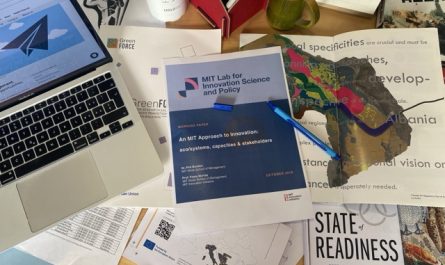
Now, how is it possible to become this well prepared guy in our metaphor? The CAS International Management at the Lucerne University of Applied Sciences and Arts helped me to combine my professional experiences with theoretical concepts – such as Joseph F. Paris Jr.’s «State of Readiness» or Michael Porter’s concept of «Competitive Advantage of Nations» – to answer this specific question.
I realised, that in order to become the excellent hiker described in this blog, you not only need a solid business case. In addition to that, you need to strive for Business Excellence, meaning continuously creating outstanding value for customers and your operational business while adapting successfully to a changing environment.
So… Is Switzerland Still Worth It?
Absolutely. But success requires a different mindset than it did a decade ago.
Perhaps the irony is this: Switzerland has not become significantly less attractive. The world around it has simply become far more unpredictable.
Entering Switzerland today is less about opening another branch and more about building a resilient ecosystem. For retailers willing to prepare thoroughly and think long-term, Switzerland remains one of the most interesting markets worldwide.
Climbing the Matterhorn has never been easy. But that is why reaching the summit is so rewarding.
References:
Paris, J. F., Jr. (2017). State of readiness: Operational excellence as precursor to becoming a high-performance organization. Greenleaf Book Group Press.
Porter, M. E. (1990). The competitive advantage of nations. Harvard Business Review.