
Using a Design Solution to Bring Gender Equality to Iran

For many young woman and girls who were born in the Middle East, their man is the owner of their life and their future. Changing this attitude and bringing about gender equality to give girls the ability to decide their marital status, job status and place of residence is no simple task.

In Iran, based on the constitution of the Islamic Republic of Iran, girls cannot get married without their father’s official consent. Moreover, according to official statistics, forced marriage is usually applied by the individual’s parents and guardians. Some factors and reasons behind forced marriage include designating a special person to marry a child because of the parents’ self-interest, rising age of marriage, expediency of marriage, as well as poverty and the need for financial security. Moreover, in 5.5% of Iranian marriages, the brides are below age 15 and forced by their fathers to marry older men (ISNA News Agency, 2018). After marriage, based on the constitution, woman still cannot decide their future. Indeed, the husband is the owner of the wife. Therefore, a woman can work or leave the country of her residence only with her husband’s official consent. These conditions violate the gender equality for 83 million people in Iran (Tasnim, 2019)

Adapting the constitution of the Islamic Republic of Iran and informing people about their right and gender equality, and also changing their mindset about family ownership can be the way to turn this catastrophic situation around. But what does the path of bringing gender equality in Iran looks like? And who should be leading to change?

The Sustainable Development Goals (SDGs)

The Sustainable Development Goals (SDGs) were developed at the United Nations Conference on Sustainable Development in Rio de Janeiro in 2012. The objective was to produce a set of universal goals that meet the urgent environmental, political and economic challenges facing our world. The 2030 Agenda for Sustainable Development, adopted by all United Nations Member States in 2015, provides a shared blueprint for peace and prosperity for people and the planet, now and into the future. At its heart are the 17 Sustainable Development Goals, which are an urgent call for action by all countries – developed and developing – in a global partnership. They recognize that ending poverty and other deprivations must go hand-in-hand with strategies that improve health and education, reduce inequality, and spur economic growth – all while tackling climate change and working to preserve our oceans and forests. (SDGs, n.d.)

The fifth Sustainable Development Goals 2030 is Gender Equality. Based on this goal “ending all discrimination against women and girls is not only a basic human right, it’s crucial for sustainable future; it’s proven that empowering women and girls helps economic growth and development.”Gender equality goal aims to end all forms of discrimination against all women and girls. Furthermore, it has targeted on eliminating all harmful practices, such as child, early and forced marriage. Moreover, gender equality ensures women’s full and effective participation and equal opportunities for leadership at all levels of decision-making in political, economic and public life. (SDGs, n.d.)

Due to the problems that have existed concerning gender inequality in Iran and on the other hand “Gender Equality” as one of the Sustainable Development Goals, it seems that we have found a concrete way to alter or at least improve the gender inequality situation of in Iran.

Applying the fifth goal of SDGs in Iran

Implementing gender equality declaration and Improving it has many positive impacts on individuals and also on the society at large. To change the current situation of Iranian woman and achieve gender equality targets in Iran we have the world’s Sustainable Development plan. Furthermore, we need the contribution of different parties in Iran to achieve the goal. Indeed, everyone is needed to reach these ambitious targets. The creativity, know-how, technology and financial resources from all of society is necessary to achieve the SDGs in every context. With a focus on the gender equality goal, if SDGs would have been applied in Iran, we achieve many benefits. For instance, the achievement of equality between women and men as partners cause to beneficiaries of development, human rights, humanitarian action and peace, security and mental well-being.

By looking at the Sustainable Development plan as a universal call, its importance, the benefits of it and its results on the various nations, we can be confident that implementing and achieving this plan’s targets will help Iranian people especially women. Furthermore, by striving to address the identified gaps in gender inequality, Iran would have been focused on issues like improving women and youth participation in decision making as well as creating equal employment opportunities for all Iranians. But how does Iran’s contribution to fulfilling its commitment to gender equality plan looks like? Have they been successful so far?

There is a problem 

In September 2015, the UN General Assembly presented the 2030 Agenda for Sustainable Development to 245 states including Iran. Based on the document all of the nations which have participated in this program must ensure inclusive and quality education for all and promote lifelong learning for everyone, regardless of gender, ethnicity or age, by the year 2030. Indeed, education on gender equality and human rights is also one of the educational topics of the 2030 Agenda for Sustainable Development. On September 2015, Iran president accepted to join this universal call and adapt changes in the educational system. (Alipour, 2018).

However, after that leader of the Islamic Revolution Ayatollah Seyed Ali Khamenei strongly criticized the cabinet’s adoption of the UN-devised global education agenda – saying documents founded on “corrupt and devastating Western lifestyle” are unacceptable in Islamic Iran. Furthermore, he states that “This is the Islamic Republic of Iran, and in this country, Islam and the Quran are the base. It is not a place for infiltration of the flawed, devastating and corrupt Western lifestyle.” Moreover, he blamed the Supreme Council of the Cultural Revolution for careless handling of this case so that the Leader himself now has to get involved and oppose it. Consequently, moving toward quality education and lifelong learning which has to be led to achieve not only gender equality, but also other targets have so far neither been approved by the Supreme Council of Cultural Revolution nor become law. (Alipour, 2018).

The government in Iran does not want to address the problem of gender inequality in society and woman life. As I mentioned at the beginning the path of bringing gender equality in Iran is no simple task and Iran have not been successful in this way so far. Who should be leading to change and who is responsible now that we are disappointed with the performance of the Iranian government in the path of bringing gender equality in Iran? what can be a design solution to unravel this concrete issue?

Design a Solution

We have seen that there is a problem of gender inequality in Iran and that the government does not want to contribute to solving this problem. We therefore need a plan that does not require government assistance. To help people in this way, we need a plan to educate them about human rights, gender equality, the benefits of woman empowerment and change their mindset. Moreover, we must inform people about the importance of the right to choose and to be elected and its life-long benefits. Additionally, in the age of digitalization, one of the best tools to inform people and educate them about a topic is social media. In short, educating Iranian people through social media is the most concrete solution meanwhile.

Currently, there are many online articles, case studies and books about gender equality and human rights on the Internet. However, the content of these sources can be useful and understandable mostly for educated people. Moreover, most of them are not Farsi. Consequently, to educate Iranian people we need to produce content about gender equality, tailored to different people’s generation in Iran and also in their language.

The first step to produce educational content would be finding reliable resources and literature which are mostly related to gender equality. After that, we need to translate them to Farsi and cluster the gathered information. Moreover, it required to put inputs in different frames which each of them is appropriate for teenagers, young people, parents and old generation. The next step is to record the collected content in the most influential way such as video, picture, podcast or other visualization formats. Afterwards, the produced content can be released on the Internet and the most accessible media in Iran such as Instagram. Furthermore, it is essential to keep the content updated and motivate people to keep their learning contributions. All in all, this way of education can help Iranian women to know their rights and ask for it. Moreover, Iranian men might reconsider their attitudes and give the right of decision making to the woman regardless of the Islamic constitution in the country.

Sources:

Alipour, Z. (2018, April 11). The teaching of gender equality sparks infighting in Iran. Retrieved March 17, 2020, from https://www.al-monitor.com/pulse/originals/2017/06/iran-unesco-2030-education-plan-rouhani-criticism.html

ISNA News Agency. (2018, December 29). اینفوگرافی / آمار ازدواج کودکان در ایران. Retrieved March 17, 2020, from https://www.isna.ir/news/97100804278/اینفوگرافی-آمار-ازدواج-کودکان-در-ایران

SDGs .:. Sustainable Development Knowledge Platform. (n.d.). Retrieved March 17, 2020, from https://sustainabledevelopment.un.org/sdgs

Tasnim. (2019, June 15). اعلام “وضعیت قرمز” ازدواج و طلاق در کشور جداول آماری- اخبار اجتماعی – اخبار تسنیم. Retrieved March 17, 2020, from https://www.tasnimnews.com/fa/news/1398/03/25/2031804/اعلام-وضعیت-قرمز-ازدواج-و-طلاق-در-کشور-جداول-آماری

Photo by Tim Mossholder on Unsplash
4 Steps you should take to implement Design Management in your Local Organisation

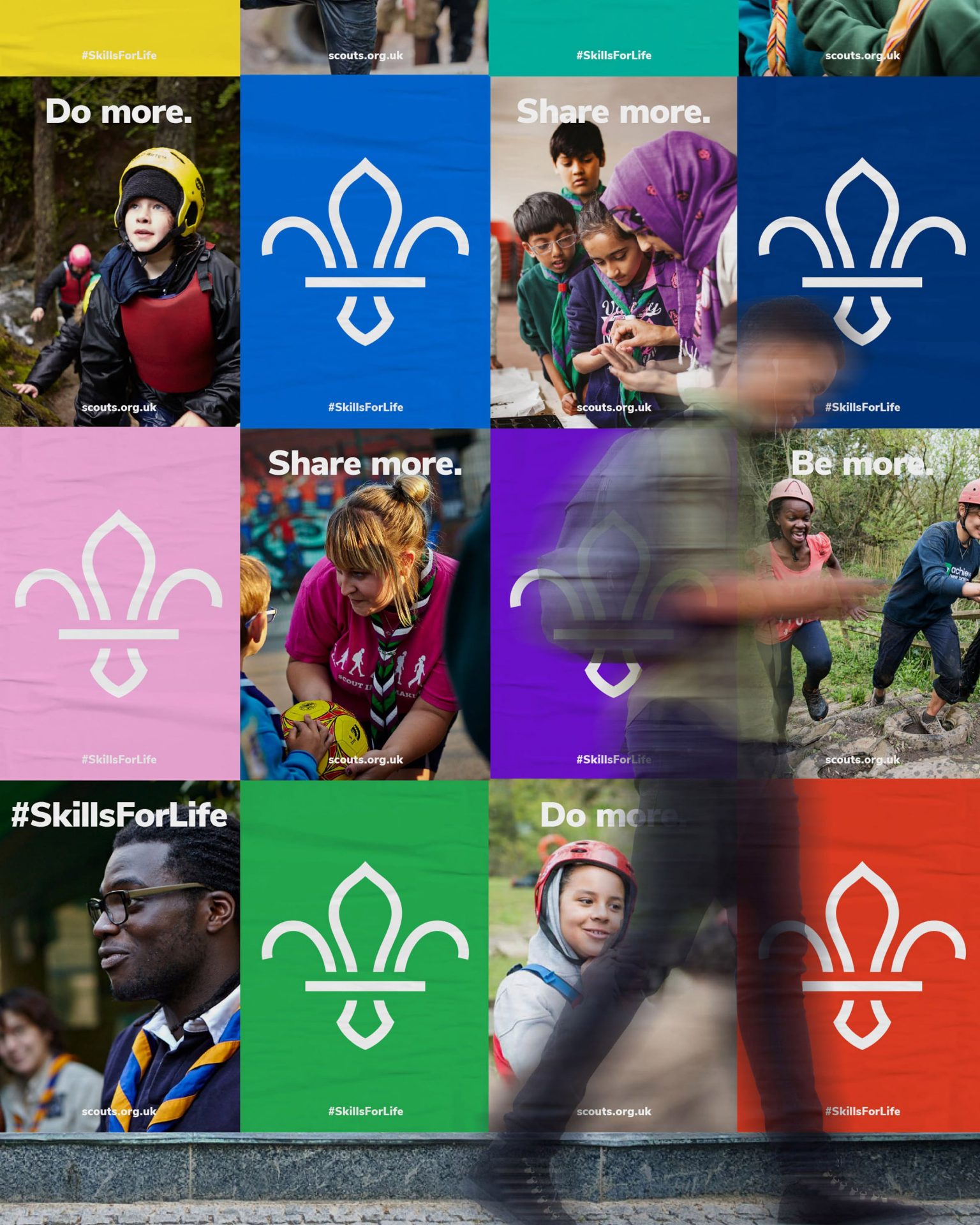
Image: Via dezeen.com, design by NotOnSunday agency.

Most likely you are participating in a local organisation or club when you are not at school or work. This local organisation could be a sports club, political organisation, scout association, hobby related group and so on. These organisations are often voluntary and do not pay their members any money. The participants get involved because of their interest and passion for the cause. Within these organisations, many different people from different backgrounds come together. This leads to an interesting mix of skills and characters, however it is often the case that within the organisation no member has a background in design or design management. Which is difficult, since the organisation could have a lot of design problems or areas where creative problem solving is needed. The solution for these organisations is to outsource everything related to design, for example getting a graphic designer to create the logo or a web designer to create a website. Therefore, the optimal solution would be to have a design manager in the organisation or at least try to implement design management in the organisation. You do not know how? Well, here are 4 steps you should take to implement design management in your local organisation.


Step 1: Analyse the Status Quo

If you are eager to change certain characteristics of your organisation, do it, but make sure everyone agrees with your plan. Organisations like these can often be old and therefore may not be open for a change. Speak to the president of the organisation or when you are the president speak to your members. It is important that everyone is keen on having a change in the organisation, otherwise you will find yourself struggling in the implementation of the change. Attributes of the organisation such as the logo, the club house, the website and even the social media page can have sentimental value for members, so do not change it without approve. If members of the organisation are not receptive of your planned change they will confront you or leave the organisation, which will create a tense atmosphere. When you analysed the situation and you are sure that everyone is keen for a change you can get started with your project.

Even though you might only plan to change a social media platform of the organisation, it is important to know the organisation’s heritage. Where does it come from? What is the core of the organisation? Who is in charge of the organisation? Is there any history related to the organisation? Any anecdotes? And if you know the answers to all of these questions you have an accurate impression of the organisation’s culture. This impression is important because you do not want to miss important information that you have not known before.

Two important factors you need to include in your status quo analysis is whether it is a long or short term solution and whether there are competitors for your organisation. In this context competitors are meant to be organisations with a similar or same agenda. For example as a football club you have many other clubs which pursue the same interest. Here you want to assure that you do not copy design ideas directly from your competitors to prevent confusion in the community and to ensure your uniqueness.


Step 2: Apply project management methods

When your organisation plans an event or has a big project coming up, try to implement a project management tactic in order for the project to run smoothly. Planning your project is key for success and you should invest a lot of time in doing that. Here is a rough outline for the planning process:

  • Identify your project.
  • Define goals and objectives.
  • Define tasks.
  • Build your team.
  • Be aware of any obstacles for your project.
  • Create a timeline.
  • Get Feedback on your plan.
  • Adjust your plan accordingly.

After you carefully planned the project you will be able to start it strong and confident. Now, it is important to keep the project on track. Frequently check on your project and assure that the time management is accurate. Communicate with the people involved in the project and listen to what they are saying, be flexible! Furthermore, if they get lost, try to provide them direction and help them to get back on track. Adress problems before they occur, so try to detect obstacles early and eliminate them. Finally, celebrate achievements on the way to the final goal. The people involved will stay motivated and will be working towards success. (due.com, 2016)


Step 3: Create a marketing plan

A marketing plan is not just necessary for companies that sell products and services, it can also be used in a non-profit organisation. The goal here is not to increase sales numbers but to increase engagement with the target group. If your marketing strategy is solid and meaningful you may find yourself acquiring new members, sponsors and fans for your organisation. Additionally, your reputation and engagement with your target group will increase. Here is a simple manual to create your marketing plan:

  • Get an overview of the organisation’s current situation (SWOT).
  • Define who you want to target.
  • Make a list of your marketing goals (For example: increase in social media engagement by 20%).
  • Set the budget for your marketing activities.
  • Research marketing tools and choose the right media platform.
  • Discuss it with a responsible person or other members of the organisation.

(entrepreneur.com, 2020)

The marketing plan is created and the next step will be to come up with creative solutions for the marketing campaign. This should be easier now, because you know the current situation of your organisation and you know who your target group is. Additionally, do not hesitate to see what your competitors are doing for their marketing strategy. Get inspired by other’s work, but do not copy it. Take what ever inspires you and translate it into the organisation’s language and implement it into a creative solution.


Step 4: Treat your organisation as a brand

Although your local organisation is not your full time job and it does not pay your salary, you can still take it serious. The contribution of the organisation to the society may not be monetary but may be altruistic, cultural, traditional, entertaining and much more. This is why you should treat your organisation as a brand. Your target group has a perception of your organisation’s presence and all the touch-points it has. Your logo is one of your touch-points and it should be memorable and most important recognisable. Develop a tagline alongside your logo, which captures the essence of your brand, is memorable, catchy and meaningful. Your organisation’s communication should be consistent in its visuals and also in the way information is provided. Use templates and create guidelines in order that all members use the same communication design. Be true to what your brand stands for and make sure you deliver your brand promise. Otherwise it may happen that your target group may not be fond of your organisation anymore or that they will stop referring you to someone they know. (entrepreneur.com, 2020)

If your organisation has some sort of billboard or display for a short or long term solution, check that the logo is on it. This may seem clear, but remember that you can attach your logo anywhere. For example if you prepare a goodie bag for the winners of your soccer tournament that your organisation runs, put your logo on it. If you have a big meet & greet with fans of your organisation get pins for them and put your logo on it. If your scout association wants to sell cookies, put your logo on it. Hopefully you get the idea and you will always remember to put your logo on it. 


Case Study: UK Scout Association

The London based design agency NotOnSunday has created a new elevated identity for the UK Scout Association. This project is part of a five year plan that the UK Scout Association created. The project was intended to shake off the old fashioned image and bring clarity and focus to the organisation. However, the strong links to its heritage were retained and the core message was not lost. Additionally the tone of voice, fonts and colours appeared more contemporary and made for digital use. The people involved always kept in mind that the look has to feel very friendly and approachable, because the UK Scout Association is such a big organisation and a lot of different people are involved.

This scouts association is the biggest in Europe and it apparently has enough resources to hire a design agency to work for a project. But this example is not relevant because of the outsourcing of the design, but the big change that the organisation was willing to make. Especially a very heritage based organisation, which was founded in 1907. This example should clarify that there is a possibility for change in a local organisation and that it can lead to an improved brand identity.


Conclusion

By analysing the current situation and having the motivation to change something in your organisation you already took the first step. But remember to always include other members of the organisation to maintain good communication and ensure that nobody feels excluded. Furthermore, check that every member of the organisation is in favour of a change, otherwise you will struggle to push your ideas and obstacles will occur. If your organisation is planning a big event do not hesitate to use project management tools in order for the event to run smoothly and use a marketing plan in case you want the event to be promoted. Additionally, try to treat your organisation as a brand, that way a lot of opportunities could come your way.

Whether you are a member of a sports club, scout association or a comic book club you will most certainly find a way to implement design management in your organisation.


Sources

Armin, 16 May 2018, New Logo and Identity for the Scouts Association by NotOnSunday

https://www.underconsideration.com/brandnew/archives/new_logo_and_identity_for_the_scouts_association_by_notonsunday.php


Entrepreneur Staff, 2020, Use these 5 steps to create a marketing plan.

https://www.entrepreneur.com/slideshow/299487


Morris Ali, 24 May 2018, Scouts’ new visual identity designed to diversify membership

https://www.dezeen.com/2018/05/24/uk-scouts-new-visual-identity-notonsunday-design/


Rampton John, 26 January 2016, How to manage a project from start to finish.

https://due.com/blog/how-to-manage-a-project-from-start-to-finish/


Williams John, 2020, The basics of branding 

https://www.entrepreneur.com/article/77408


That’s how you get a job after graduating from DMI!

Finding a job is never an easy task. For the last couple of months, I was challenged to find an internship. The most difficult task for me was to define my job profile. What are my strengths? In which field do I want to work in? To which company and what role should I apply for? During this time, I talked to many people in my Design Management International class about their experience with finding an internship. I realized that it is not a challenge only I face. 

To get to the bottom of these questions, I contacted 3 former DMI students and asked them about their experiences with finding a job after graduating from DMI.

Originally, I was looking for an answer to the question of what the perfect title for Design Managers in the real world is. Lorena, one of the alumni, explained to me however that there is none. “What we learn in DMI, is definitely demanded in the market. The question is a bit what to call it.” You study Design Management, and could think your title after graduating from your studies would be the same, right? – wrong! Your working title could be Experience Consultant, User Experience Designer, Project Manager, Design Analyst, Business Designer, Innovation Manager, Communication Manager, Brand Developer, and the list goes on.

The 4 DMI Types

This statement of her, inspired me, to take the different fields of DMI apart and to combine them into 4 DMI student profiles which I elaborate about bellow. This may help you to identify which field of Design Management may best suit you. So have a close look at the different types and at the end of this article – if you cannot figure it out yourself – you can find out which DMI type you are, in a quiz.

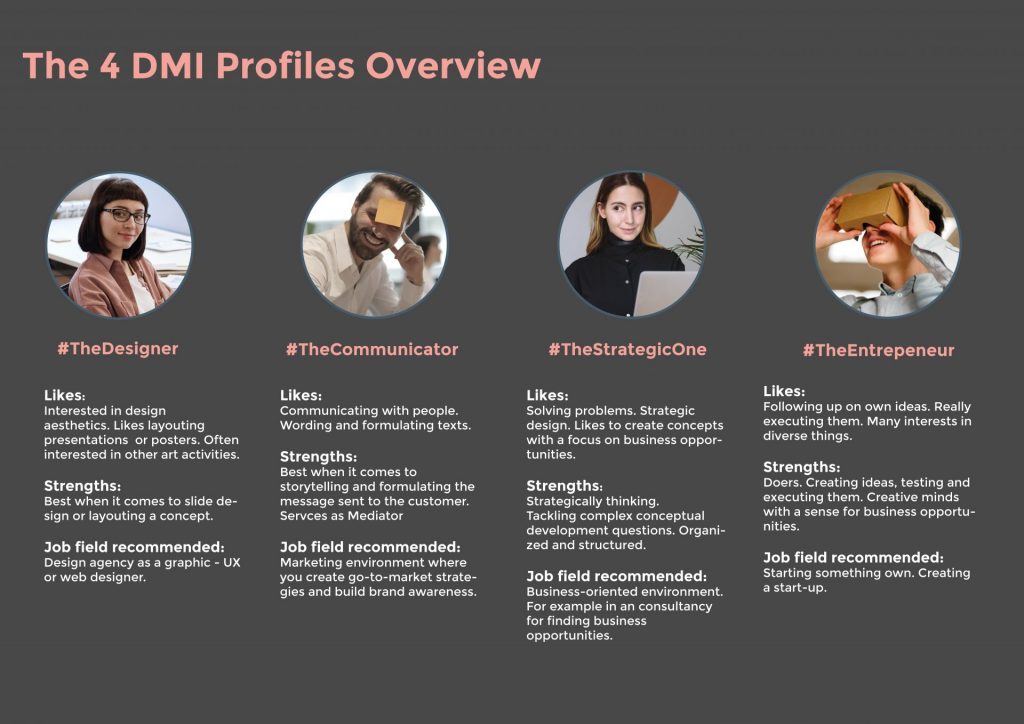
#TheDesigner: The designer is most interested in the design aesthetics and is often also invested in other art activities -photography, for example. The designer is the best when it comes to slide design or layouting a concept. For this type, I recommend working in a design agency as a graphic – UX or web designer.

#TheCommunicator: The Communicator likes to present their idea to people. They are excited about finding the right message and wording to promote a product or service. This type is the best when it comes to storytelling and expressing themselves. They love to work with people and often serve as a mediator. For this type, I recommend a marketing environment where they can create go-to-market strategies and build brand awareness.

#TheStrategicOne: The strategic one loves solving problems and is interested in strategic design. This type likes to create concepts with a focus on business opportunities. These people are great at thinking strategically. They fancy tackling complex conceptual development questions and are organized and structured. For the strategic one, I recommend a business-oriented environment, for example in a consultancy for finding business opportunities. 

#TheEntrepreneur: The Entrepreneur has often own projects they work on aside from school. They have many interests in diverse topics and love developing and, especially, executing ideas. They are doers and creative minds with a sense for business opportunities. For them, I recommend starting something own – to create a start-up, for example. 

The 3 DMI Alumni and their Story

 Maybe, you found a type that matches you. But what could that mean for your career path? I want to depict your possible future on the bases of the interviews I had with the 3 DMI alumni, Lorena, Milo, and Roman. Spoiler alert – their story will match perfectly into the DMI types as well.

Lorena #TheStrategicOne:

“Going in a strategic direction is certainly very future-oriented as it is a constantly growing market”

Digital Transformation and Innovation Manager at Accenture 


CV: As a former seamstress, Lorena decided to study Design Management International in 2011. Midway through her studies, Lorena realized that she wanted to work in the field of strategic design at a management level in the area of innovation. Therefore, she already adapted her bachelor’s thesis to this topic. During an interview for the thesis, she established an important contact that helped her in getting her first job after graduating from DMI at Partake AG in Berlin.  After three years she returned to Switzerland and started working for Accenture as Digital Transformation and Innovation Manager. By the way, she gave herself this title.

 Her Tasks: Her work at Accenture involves managing cross-industrial innovation projects. It is about bringing end-to-end innovation to the client. She also consults companies on how to integrate innovation into their daily business, for example, through innovation labs. 

 Requirements: You must be strategically thinking and always up to tackle complex, conceptual development questions.

 Her Number 1 tip for getting a job: To find a job after graduating from your studies, networking is essential. Update your LinkedIn profile and visit events, for example via Meetup!

Roman #TheEntrepreneur: 

“Ideas are worth nothing, execution is worth millions”

Professional Inventor at Creaholic


CV: As a trained mechanical draughtsman, Roman started studying Design Management International in 2013. During his studies, he was interested in the field of qualitative research in the area of innovation and product development. After finishing his bachelor’s degree, Roman became a co-founder of the start-up Yelloh. Yelloh made it possible to conduct qualitative research through an online video survey tool. He worked on this project for a year until he and his colleagues decided to quit the project. He says: “Above all, I learned that the saying don’t listen to the nay-sayers is true, but you also have to be very objective in judging the market response.“ 3 months after Roman stopped working on the start-up, he met a DMI alumni and told him about Yelloh. This contact worked at Creaholic at that time and recommended Roman to his employer. Today, Roman has been working as a Professional Inventor for 2 years at Creaholic.

His Tasks: Roman mainly works on invent projects, especially in the field of product or service creation. He also coaches employees in Swisscom’s Entrepreneurship Program, where employees realize their own ideas and create their own start-up. He also develops products or service concepts with external customers. In developing these projects, he makes use of lean prototyping. Developing prototypes and testing them right away is his greatest passion at work.

 Requirements: You have to be able to work well with people, be methodical in design thinking and lean methodologies, have an understanding of business issues (how to build a business case) and above all, you have to be a doer.

His Number 1 tip for getting a job: Graduates often refuse to do an internship. However, an internship, a trainee program or a start-up opens doors into the working world.

Milo #TheCommunicator:  

I am the interface between internal departments and external agencies”

Brand Manager and Content Developer at Swiss


CV: After his apprenticeship as a gardener, Milo did the creative pre-course. He then decided to study Design Management International in 2015, because he was fascinated by the connection between the two poles of design and business. After graduating from DMI, Milo applied for many positions before finding the internship at Swiss as Brand Manager and Content Developer. He sent out the application for the job via LinkedIn. Fortunately, a DMI alumni had been working at Swiss at that time. Through inside inputs, he was able to catch the job during the official interview.

 His Tasks: Milo works in the Brand Management Team, which is part of the Swiss marketing team. There, he works as a Project Manager. He is the interface between internal departments and external stakeholders. He describes himself as a project manager with A clear understanding of design. Among other things, he is responsible for developing flyers, brochures, or internal communication material.  As he works with all departments within the company Swiss, he has a very broad insight into the whole firm, which he particularly enjoys. 

 Requirements: For this job, you need to be empathic and a good mediator in order to communicate properly among the different stakeholders. An open manner helps to approach people.

 His Number 1 tip for finding a job: Never get discouraged after being rejected during the application process, sometimes it takes a little while longer to find a place that suits your skillset.  

Key insights

Networking: All my interview partners have gotten their current position by some kind of vitamin B, therefore building a network is the single most important learning here. In fact, former DMI students are our most valuable asset. They work in a variety of companies and fields and in my experience, they are all incredibly friendly and helpful. So, be aware of your contacts, take the chance to make new ones and maintain your LinkedIn, “because often the great jobs go away underhand and are not even advertised,” Lorena warned me. 

Letter of Application: Less is more: I always thought that a comprehensive letter of application shows your motivation. Maybe you had similar assumptions and filled one page with text as well. But from Milo, who applied to several companies, I learned: “Less is more. In the beginning, my application letter was overwhelming. At some point, I got the feedback from an employer to shorten it. I’d rather have 5-10 sentences that are crisp than half a page of text.” Also don’t share all your information at once, some kind of mystery makes the employer curious to find out more. 

Motivation: The tip about motivation goes hand in hand with the one above. Lorena expressed it accurately: “There is nothing more important for graduates in a letter of application then to show their motivation and a willingness to learn, when applying for a job with us at Accenture. ”

Bachelor Thesis: One advantage of knowing the field you want to work in before graduating from your studies is to be able to steer your bachelor thesis accordingly. Because even the bachelor thesis can open the door to a job or an internship just like it did for Lorena. Also, Lorena recommended doing the thesis with a company to get hands-on experience. 

Master Program: At a certain point, getting a master’s degree is essential if you want to climb up the career ladder, however, the alumni did recommend to get some working experience first. Lorena expressed that accurately: “I would not recommend doing a master’s degree directly after the bachelor’s degree, because the DMI program is so generic. You don’t really know where to start. I would recommend gaining work experience, see what interests you and then decide in a second step what skills you still lack to get ahead.”

 Internship or Trainee Program: Even though, many graduates want to finally start a real job, an internship or trainee program after the bachelor’s degree is almost indispensable as it seems. “You should not feel bad about doing an internship after graduation. It can open many doors for you,” says Roman strongly. 

Companies to apply for

You weren’t really sure where you could apply so far – here I got the answer. These are a handful of companies in different areas that the 3 DMI alumni fancied. According to Lorena, every large company already has an innovation team by now. Therefore, this list is just a selection.

Innovation Companies:

  • Accenture
  • Fjord
  • Frog Design
  • Creaholic
  • Spark works
  • Melt
  • INNOArchitects

 Creative Consultant Agencies:

  • Vetica Group
  • Publicis
  • A4

 Creative Agencies:

  • Futureworks
  • Jung von Matt
  • ZürichTokyo

Big companies with Innovation Teams in Switzerland: 

  • Swisscom
  • SBB
  • Die Post
  • EWZ
  • AXA Versicherung


 Closing words

This blog was less meant to steer you in a certain direction but more to provide you with some valuable insights from alumni who were once in the same position as we are now – figuring out what we want to do with our lives after graduating from DMI. So, keep the 6 tips in mind for the coming year and especially important; start building up your network! 

And finally, I leave you with the fun task of doing my personality test on the 4 DMI profiles to identify which DMI type you could be.

https://www.riddle.com/view/238433


Will Design Managers be Replaced by Machines? Towards an AI-powered future

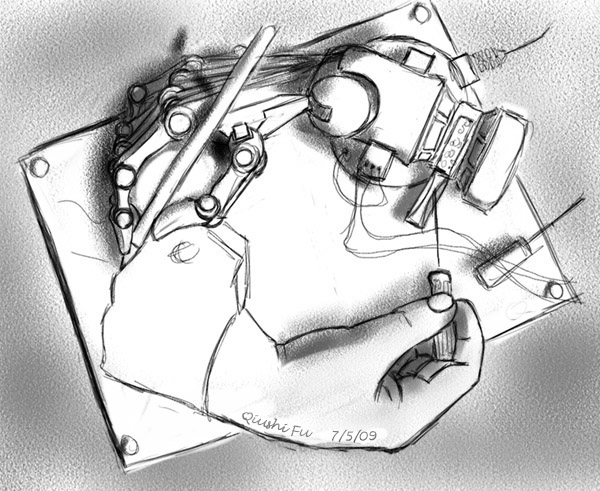
Hand drawing robot

Image: Qiushi Fu  

Humanity depends on technology more than ever before. We no longer remember phone numbers because we have everything saved on our phones, and we no longer use a map because we let a navigation app do the work for us. Machines have been taking over human roles since the industrial revolution, and with artificial intelligence (AI) systems, even complex roles could be done by machines. Would that be the case with design managers? And what does AI even mean?

AI: The Basics

Artificial Intelligence is a field in Computer Science that focuses on developing computers that can make informed decisions independently. The term artificial intelligence was first coined by Stanford researcher John McCarthy during the Dartmouth Conference in 1956. McCarthy defined the main mission of AI as making machines “use language, form abstractions and concepts, solve kinds of problems now reserved for humans, and improve themselves” (Hammond, 2015).

Although the term was coined 64 years ago, the real flourishing of AI started only recently. This happened for several reasons (Hammond, 2015; Kim et al., 2019):

  1. Increased availability of data – more accessible data helps to train AI by enabling it to learn from many examples.
  2. Increased computational resources – computers are cheaper, stronger and faster; hence, they can cope with huge amounts of data.
  3. Increased use of machine learning (e.g., deep learning) – we do not need to write rules for machines to follow. Instead, machines can be trained and learn these rules automatically.

The development of AI will require the openings of new jobs: trainers, explainers and sustainers (Wilson & Daugherty, 2018; WIRED, 2018): every AI system needs to be trained to behave the way it is supposed to. More people would be employed to take care of the AI’s training. If AI is used to help humans make decisions, experts would be employed to help explain the data analysis process done by the AI, preceding the outcome. By explaining the outcome, the explainers would promise the trust between humans and AI systems. Finally, more people will be hired to sustain AI systems. They would make sure the AI functions safely and ethically.

When thinking of AI, what comes to your mind? Do you think about C-3PO and R2D2 or do you think about Siri and Cortana? Well, AI is even more common than that. AI is also when Netflix gives you viewing recommendations according to your previous views, or when a word processor advises you on a better way to write your text.

Okay, now that we’ve covered the basics, let’s talk about design management.

Design Managers & AI

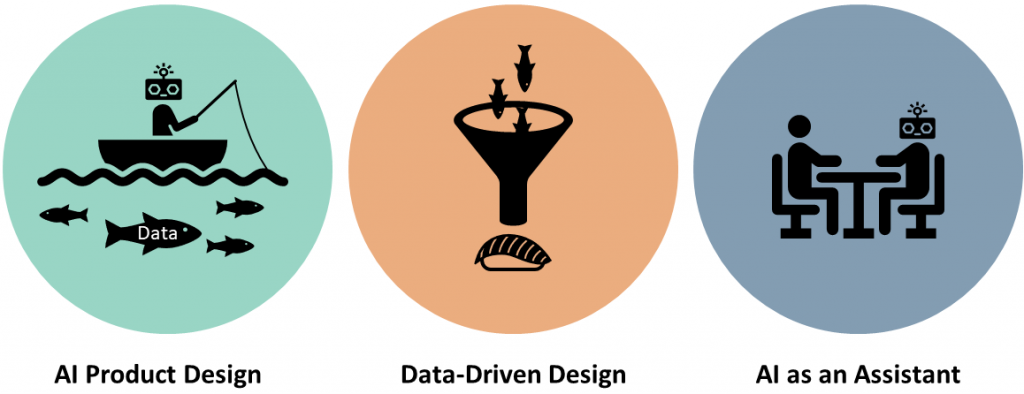
When it comes to design, it seems that there are three areas in which design managers could encounter AI in their daily work:

  1. Data-Driven Design – training AI as part of a design process to innovate new concepts.
  2. AI Product Design – working as part of a team designing an AI product.
  3. AI as an Assistant – using AI as an assistant, with the design manager as an end-user.

    Three areas in which design managers could encounter AI in their daily work.
Data-Driven Design

AI can complement our abilities and help us work better and faster. The goal of many AI-powered systems is not to replace humans, but to collaborate with them. A collaboration in which an experienced human works with AI, trained by data about past successes and failures. AI will be able to give design managers relevant information that could inspire them to come up with innovative solutions.

One of the main parts of the design process, and our main challenge as design managers, is to come with a clear problem definition. Design managers would have to identify and find relevant data for the AI to train on according to that problem definition. Does the data exist and are available? It depends on the case. What is known for sure is the need to improve our skills when it comes to dealing with data, in order to solve customers’ pain points.

AI Product Design

When working on an AI product, design managers should be prepared to work with a diverse team. It requires the effort of people from many fields: data scientists, engineers, developers, designers, human behaviorists, and when it comes to ethics, even lawyers. It would probably put one of the main roles of design managers – integrating – to the test. In addition to the team being multidisciplinary, it should also be culturally-diverse: an AI system learns what we teach it. A diverse team tends to have a wider range of opinions and tends to be more sensitive to gender and culture bias. Cases where AI systems were unintentionally trained to be biased have happened in the past. For example, if an AI is trained to recognize people, but the database it learns from only contains men, women might not be recognized. Working with a diverse team can prevent this from happening.

Design managers would have to learn about the differences between classic human-computer interaction and human-AI interaction, which comes with new challenges and opportunities. For example, users will expect a regular computer to be consistent and predictable, while expecting AI to be less consistent as a result of learning and evolving over time. Part of this would also be about making the interaction with AI transparent, and decide how an AI product might explain itself to a user. If the process to an AI’s outcome is understandable, it could increase users’ adaptability to the product and loyalty to the company.

AI as an Assistant

Virtual assistants can communicate with others to schedule appointments, while chatbots can provide information for many customers at the same time. AI systems are being trained to understand the context of the conversation, and even the tone of speaking, to provide better customer service (Wilson & Daugherty, 2018). AI might not be able to understand emotions entirely, but with the analysis of customers’ choices and behaviors, it could help cut down manpower and give critical feedback to design managers.

AI can help design managers be more flexible and offer product customization to customers. No more “Any customer can have a car painted any color that he wants, so long as it is black” (Henry Ford), thanks to the AI’s ability to adjust to changes. In addition, it could enhance customer delight by providing tailored experiences according to their past preferences (Wilson & Daugherty, 2018).

What’s Next?

Design managers are trained to cope with uncertainty and become familiar with innovative endeavors. AI is exactly it. We must adapt to innovations that could augment our abilities. In a way, we have to keep improving and evolving, the same way that AI systems do.

As design managers, we need to learn about AI and adapt our role accordingly: we need to discover what AI could help us do, what AI might not be able to do, find this gap and fill it. For example, while AI can analyze a large amount of data, it still cannot come up with original ideas without a human making the data available and defining specific parameters for it. Even better, design managers should be the ones to recognize AI as a trend that can add value to the business. If a specific business is not yet aware of the benefits of AI, design managers can be the ones pushing the business to be more AI-savvy.

So, should we be worried? Not if we’re prepared. As AI becomes a common tool to improve businesses and keep their competitive advantage, it is possible that soon we would all have the opportunity to work with AI systems. Norman (2013) sees the ability to collaborate with machines as an opportunity for humans to become smarter, faster and stronger. Machines and AI systems can free our minds from the small things that waste our time and allow us to focus on the important ones. We will still use our brains; it is just that the tasks will be different.

Want to start familiarizing with AI? Here is a good place to start: https://uxplanet.org/designer-friendly-resources-to-study-ai-and-machine-learning-1-6106e257faeb


Resources

Afshar, V. (2018). AI will transform product management. Retrieved from ZDNet: https://www.zdnet.com/article/ai-is-transforming-product-management/

Cossins, D. (2018). Discriminating algorithms: 5 times AI showed prejudice. Retrieved from NewScientist: https://www.newscientist.com/article/2166207-discriminating-algorithms-5-times-ai-showed-prejudice/

Dewalt, K. (2017). Product Manager is the Hardest AI Position to Fill. Retrieved from Prolego: https://blog.prolego.io/product-manager-is-the-hardest-ai-position-to-fill-9d753bf4cfcc

Hammond, K. (2015). Practical Artificial Intelligence for Dummies. Hoboken: Wiley.

Kim, S. G., Yoon, S. M., Yang, M., Choi, J., Akay, H., & Burnell, E. (2019). AI for design: Virtual design assistant. CIRP Annals, 68(1), 141-144.

Norman, D. (2013). The design of everyday things: Revised and expanded edition. Basic books.

Oh, J. (2019). Yes, AI Will Replace Designers. Retrieved from Medium: https://medium.com/microsoft-design/yes-ai-will-replace-designers-9d90c6e34502

Vorvoreanu, M., Amershi, S., & Collisson, P. (2019, March 5). Guidelines for Human-AI Interaction- Eighteen best practices for human-centered AI design. Retrieved from Medium: https://medium.com/microsoft-design/guidelines-for-human-ai-interaction-9aa1535d72b9

Wilson, H. J., & Daugherty, P. R. (2018). Collaborative intelligence: humans and AI are joining forces. Harvard Business Review, 96(4), 114-123.

WIRED (2018). AI and the Future of Work. Retrieved from WIRED: https://www.wired.com/wiredinsider/2018/04/ai-future-work/

Icon Credits

Thank you to Andrew Doane (Fisherman), alberto galindo (Funnal) and Oksana Latysheva (Robot head)  from the Noun Project.

Tackle Wicked Problems – Redesign Your Thinking

Have you ever been in an argument without the slightest hope of finding common ground? Where both parties involved felt like they were hitting a wall? Entangled in a net of allegations? Have you ever found yourself ponder problems like the Social Development Goals (SDGs)? Wicked problems so complex, finding solutions seems futile. Just thinking about solving them can be taxing.
During an argument, letting go of your initial thoughts and consider the view of the other is difficult, to say the least. We’ve all been there, we’ve all failed numerous times. How then, might we change our perspective to a whole group of “others”. Consider other people directly affected by the triggers of the SDGs. People experiencing injustices and lack?
Even though the comparison of a mundane argument and the SDGs is unbalanced, I propose, they share an attempt at a solution. What if all you would have to do in an argument, is a shift of perspective, a change of mind? What if altering your thoughts not only benefit you during an argument but also lead the way to solve bigger problems, even wicked Problems? Albert Einstein supposedly said:

“We can’t solve problems by using the same kind of thinking we used when we created them.” -A. Einstein, 1946

Thus, if redesigning our thinking will lead to new solutions, I suggest we set forth to do it right now.

A quick explanation about thinking

First of all, it is important to know how our thinking is formed and what influences it. Our thoughts evolve from our theoretical framework. Our theoretical framework is a combination of our worldview and our value system out of which we take the information for our practice (Wahl, 2012). It is the way we think about and interpret information. This framework has been establishing itself since our earliest childhood, it puts itself together out of our expectations, teachings, experiences and our family and communities (Willard, 2002).

Reframing our theoretical framework

Our theoretical framework has formed itself without us being conscious of it. Hence, with us paying attention, reframing it is possible. If we permit new pieces of information to enter our theoretical framework, we enable them to challenge- and expand it. We do this by letting go of existing prejudices and taking the time to listen, explore, ask and look. Every one of us is responsible for the way we take in information. It is a choice, whether we contemplate pieces of information that grow outside of our comfort zone or not. Furthermore, we need to make sure that we look for true information, since, it will be the foundation we work on. We should make an effort to look for reliable sources, take in and ponder fresh information, let our mind transform this information into novel ideas and actions. This will break through barriers of what we can, want, choose and therefore create.
A daring act, considering how cumbersome it can be, to change only a fragment about ourselves. Even more so, if we want to change patterns that coined our mind. Redesigning our thinking requires us to question our values and assumptions. This act may feel like an earthquake that shakes our deepest beliefs. Much like when you are in an argument and suddenly realize that you are wrong and the other is right. Or when you look at the SDGs and think “how did we ever let it come this far?”

Why bother?

Alongside the discomfort a redesign or your theoretical framework might release, there are other repercussions. Yes, it will change the way we think. However, its effects go far beyond the metaphysical. Our thoughts influence our actions. As Maturana and Varela put it:

“Every act of knowing brings forth a world. All doing is knowing, and all knowing is doing.” -Maturana&Varela, 1987

The way we act depends on what we know and how we think about this knowledge. This implicates that every practical act depends on our theoretical frameworks. If you consider the number of unresolved conflicts in your life, not even to mention the vehemence of the SDGs, it is evident that the theoretical framework of most human beings is not a union of empathy, equality and humbleness. The human condition has brought on a lot of trouble. But take heart. If our theoretical framework has been formed without our awareness, we can intentionally change it. We can ameliorate our ability to seek and digest virtuous information. Good and noble deeds will naturally follow.

Design helps!

We have established that our thoughts emerge from a place within us. A place we can mould. This process will most likely start tearing down thought patterns and convictions we have been forming since early childhood. The process will be difficult to cope with, thus, we need all the help we can get. One source of help is design.
Before you stop reading because you are tired of hearing: “The answer to a problem is design,” let me elaborate in more detail.
During their collaboration with the renowned architect Frank O. Gehry, Richard J. Boland Jr. and Fred Collopy noticed the difference between Gehry’s design attitude and their decision attitude. According to them, a decision attitude is approaching a problem with the mindset that the solution is it is choosing one of several, pre-existing options. The design attitude, on the other hand, goes beyond standard choices and creates new possibilities for the future:

“The design attitude appreciates that the cost of not conceiving of a better course of action than those that are already being considered is often much higher than making the “wrong” choice among them.” -Boland & Collopy, 2004

Design allows us to leave possibilities open. In doing so we can cope with uncertainty better and explore opportunities which might lead to unforeseen insights and solutions.

The effect of design on thought

To reform our thinking for the better, we need fresh and versatile information. So what would be a wise way to go about getting this information? You guessed it, a design attitude. Especially when we want to tackle highly complex, interconnected problems like the SDGs, shared by a multitude of stakeholders, we need an attitude that looks beyond what is already there and seeks new possibilities. An attitude allowing us to start a process, an approach or a lofty project, without knowing where it leads to and if it will work out. Only then can we lose the fear of being wrong and break through the walls our current theoretical framework has built around us.

So what now?

To reform our theoretical framework we can apply a set of practices Dave Gray, the author of “Liminal Thinking”, suggests. These practices align with the design attitude. They are open-ended, retaining from nudging you in a certain direction. Gray suggests getting in touch with your ignorance, seeking understanding and doing something differently (Gray, 2016).
Based on his suggestions I propose that each one of us starts by taking small steps in these three areas:

  • Get in touch with our ignorance: Explore your history. Ask yourself, which values you hold high, consider your past and watch out for moments in which those values were formed. Ask yourself, what the most important lessons you learnt during your childhood are. Maybe it is time to question if these values and lessons are still relevant. Most likely you will discover some blind spots you need to shine light upon.
  • For practising seeking understanding: Look for people who ask the same questions as you, even though you might know beforehand that you will not share the same answer. Be patient with them as well as with yourself.
  • Lastly, doing something different: Challenge yourself to seek new sources of information. Consider sources that are in contrast to what you’re scrolling through usually.

Let’s start reframing

Whether we want to have more fruitful arguments or confront wicked problems like the SDGs: we need to challenge our jammed thinking if we want fresh solutions. A conscious redesign of our thoughts can help. Provided that our approach is open-ended, allows for uncertainty, ambiguity and does not sift out every piece of information that challenges our existing theoretical framework. A design attitude supports this way of thinking since it gives us the option to leave possible outcomes open, without being overwhelmed by seemingly unsolvable problems. The steps each one of us can take to start with the redesign do not have to be intricate. Start small, but start somewhere. Become aware of your theoretical framework. Start venturing into the vagueness that questioning and reforming will bring. Only then, can we address wicked problems with a fearless mind, refusing to get downhearted by the uncertain outcomes of our endeavours.


References and Sources


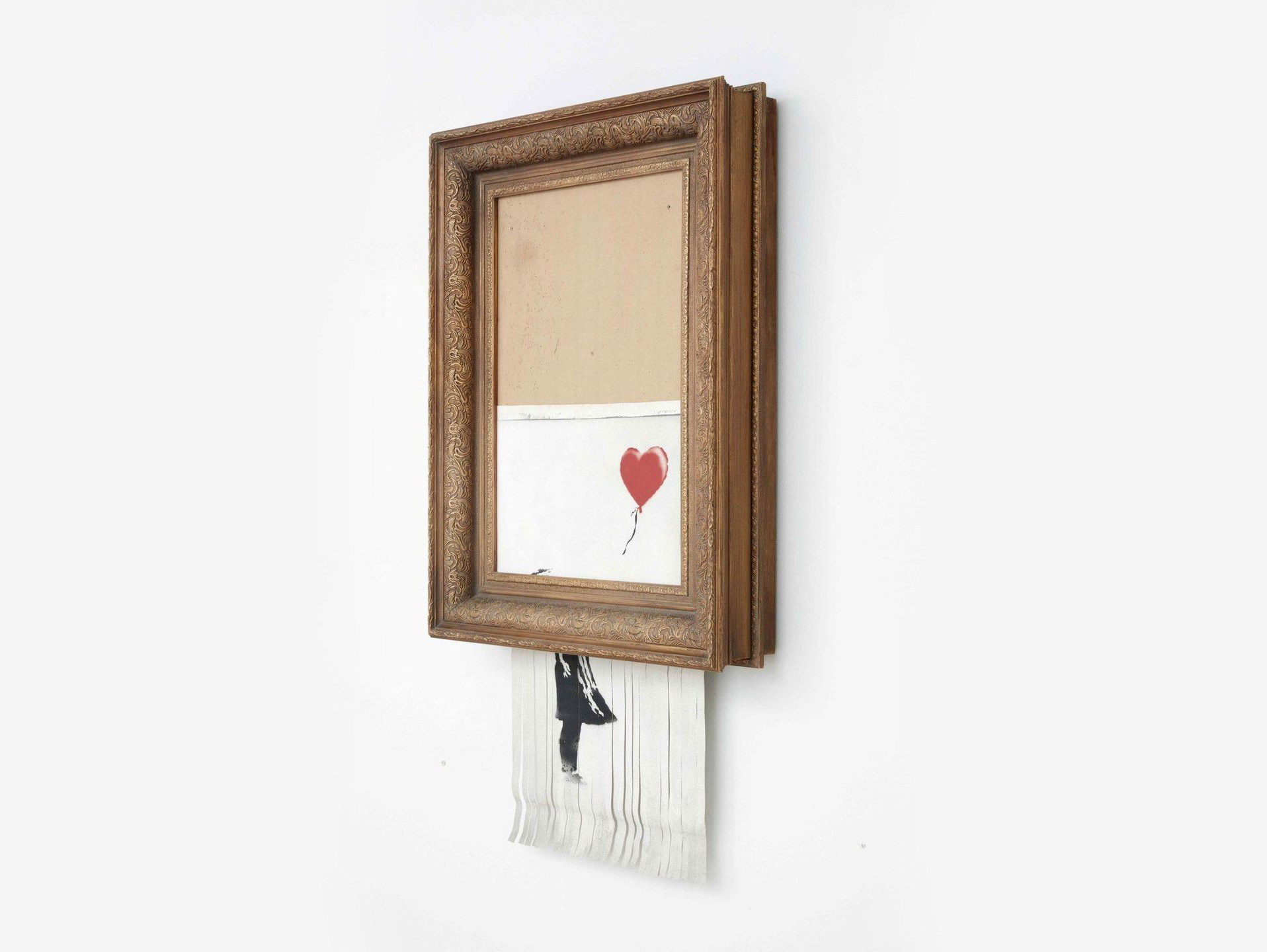
  • Featured Image: Banksy, Love is in the Bin, 2018, Private Collection, Photo: Sotheby’s © Banksy
  • Boland jr. R.J., Collopy F. (2004). Managing as Designing. Stanford Business Books
  • Gray, D. (2016). Liminal thinking: create the change you want by changing the way you think. Brooklyn, NY: Two waves books.
  • Maturana, H. R., & Varela, F. J. (1987). The tree of knowledge. Boulder, Colorado: Shambhala.
  • Willard, D. (2002). Renovation of the heart: putting on the character of Christ. NavPress.
  • Wahl, D. (2016). Designing Regenerative Culture. Triarchy Press.


4 Ways to improve & excel in remote teamwork as a design management student

The current crisis forces people around the world, including us students, to stay inside – still performing and producing solid work outcomes. The crisis also forces a lot of Swiss design students to participate in seemingly endless video-conferencing meetings, staring into a screen for most of the day. Studying design management myself, I am consistently solving wicked problems and designing for the future. For the most part in teams.

As part of Generation Y and Z, we are used to double-tap on pictures and comment on what we like on social media platforms. We do not struggle with using online search tools and software for the most part. We most likely deal with error messages just by closing the window and moving on with our day. Also knowing how to behave best in online meetings. Which for example means to follow the netiquette by turning off the microphone when not speaking. It all does not seem to be too big of a challenge for us students. Right?

Still, the current times ask for different, new measures. As students who normally work in creative thought and workspaces, we are challenged to find new ways to successfully communicate ideas, project updates, and design inputs online.

This blog entry is thus meant to share four helpful insights on how to improve your communication and teamwork online. It is meant to empower you to keep successfully designing for your group projects. So here we go.

Use timeboxing to improve productivity

Working remotely means less social distraction and it seems as if we have less capacity and patience for online chit-chat. Therefore we tend to jump into work right away. This can be a beneficial side effect to increase productivity in teamwork but does not mean that we can end up in long, demanding discussions. If you find your team and yourself in a discussion rut consider using the timeboxing method.

Timeboxing is a technique to fix a certain time frame for an activity in advance and set a timer for it (Orgler, 2016). Orgler explains in his blog post, that there are two different kinds of timeboxing which are called soft and hard timeboxes. For the soft one, you allocate a certain time slot to a specific task or discussion topic but are allowed to finish it even after times up. Whereas for the hard time box you are asked to take a break or drop your work and head to the next task on your agenda (Orgler, 2016).

It is important to visually show the time running for everyone, so go ahead, share your screen and use a web timer. Agree as a team on the length of the time box for each task. Remember to not go on for too long, as we get tired more easily working online. As a reference, working with time boxes in a workshop is often structured with 60 minutes in total. Which means 45 minutes of work for each agenda item and a 15 minutes break afterward. For university and school projects online, this might possibly too long, so make sure to adjust your schedule accordingly.

Adapt existing design thinking methods to work online

There are plenty of design thinking methods out there that help us to connect and share thoughts differently. So, if you are struggling to get creative whilst working remotely, consider picking up a method and adapting it to working online.

An example of such a method is the Liberating Structures method 1-2-4-all. This method is based on five structural elements, which are 1 minute of self-reflection and jotting down ideas, 2 minutes of sharing these thoughts with someone else, 4 minutes of sharing in teams of four and 5 minutes of sharing insights within the larger group (Liberating Structures, n.d.).

For online purposes, however, the application of this method would mean to create break-out rooms to split up. To avoid extra time and energy efforts to start separate meetings, consider taking the base idea of the method – which is to first think for yourself and then with others – and take 2-3 minutes to personally jot down ideas, thoughts, inputs on your project and then take up to 10 minutes to share in your team. Just make sure to turn off your camera and mute your microphone for your self-reflection time.

Find helpful tools to creatively collaborate

Productivity is just one side of the coin but what about creativity?

To do structured tasks online collaboration does not seem to be that big of an adjustment. But when it comes to sharing ideas that go beyond verbal, structured communication, we can feel the restrictions of not having face-to-face interactions.

Knowing a handful of online tools to choose from therefore comes in handy. Tools such as Figma, Sketch or Miro enable designers to collaborate in real-time on the same overview (May & Cahill, 2019).

One of the best tips I ever received concerning reading books is just to stop reading it if it does not captivate me after a while. There are so many books out there so do not waste your time on one which does not read well for the time being. You can always pick it up again at a time where the content might be more appealing to you again. I found the same to be true for online work tools. Do not waste time on straining your team and yourself with working with a tool. Try it out and if it does not feel right, drop it and try out another one. Trial and error can feel exhausting at times but your team will come out stronger and smarter, after finding new ways of working together.

If you and your team find it to be hard to pick up a new tool within a short period, maybe there are already known tools such as Keynote which can help you simplify your life? And do not underestimate the power of a shortly sketched visual on a piece of paper held into your camera to communicate what you want to explain to your team members. Keep the ideas coming.

Foster changing your team culture and work environment

It is not a new phenomenon for communication to be key in a group. It is also no secret that our ability to communicate influences the effectiveness of our teamwork.

But while doing all the work talk we lack social connection when working remotely. In a digital, remote workplace where boundaries often get blurred, the importance of strong team culture is hence not less essential. So how can we improve our team spirit while working from home?

On the one hand by intentionally taking time to catch up and small-talk as a team, even when restricted to toast on each other online. This can be simply done by just checking in 5 minutes before the official meeting starts or at the end of a meeting. You can also be bold and ask others to chat outside of working hours because you might just be too tired to talk right before or after a team meeting.

If you are feeling your teamwork is unsatisfying or simply want to upgrade your team culture there is the opportunity to do an online reflection via an online whiteboard tool called Mural.co. Reflect on what has enabled effective remote work and what has hindered effectiveness in your teamwork and follow the four easy steps explained here (Toolbox Hyperisland, n.d.).

Besides personal connection, we also lack movement when working remotely. Studies show that walking helps us to diverge our thinking (Richdale, 2020). So if all the teamwork tries to burden you and your team members just go on a walk together and ditch the video-conferencing for a no-camera-just call walk. After all, you have the freedom and flexibility to do it in current times like these. This is your opportunity to start working differently, to change settings more often than usual and to break out of your normal work and study environment. Walking gets your mind going and helps to shift your thoughts when feeling stuck.

Cease flexibility and run with it

Even when facing changes in working together, we can still manage to be successful design students by adapting to our given circumstances, working remotely from home. We are Generation Y and Z students, currently even more immersed in the digital world, but we are also after all capable to learn, apply and improve. We are equipped with the knowledge, methods, and tools we need to become ever more flexible in how and where we work. Let’s focus on the possibilities we have and the freedom we can gain from them.

For more inspiration and reminders on methods and tools to use visit designkit.org/methods or toolbox.hyperisland.com.

Sources

May, T., & Cahill, C. (2019, December 23). 52 web design tools to help you work smarter in 2020. Retrieved from https://www.creativebloq.com/features/best-web-design-tools

McCandless, K., & Lipmanowicz, H. (n.d.). Liberating Structures. Retrieved from http://www.liberatingstructures.com/1-1-2-4-all/

Methods. (n.d.). Retrieved from https://www.designkit.org/methods

Orgler, M. (2018, December 29). 7 secrets to master timeboxing. Retrieved from https://medium.com/dreimannzelt-adventures/7-secrets-to-master-timeboxing-66a744ea9175

Richdale, A., Pearce, D., Moore, A., Kosner, A. W., Richdale, A., Richdale, A., … Richdale, A. (n.d.). “Sorry, I have a walk scheduled then”. Retrieved from https://blog.dropbox.com/topics/work-culture/-sorry–i-have-a-walk-scheduled-then-

Team Remote Working Charter. (n.d.). Retrieved from https://toolbox.hyperisland.com/team-remote-working-charter


Quarantine-Design: 10 Affordable and Easy Tips for your Wellbeing at Home during the COVID-19 Crisis

As a certified yoga teacher and passionate wellness advocate, I decided to put together 10 easy and accessible tips for quarantine-friendly living during the current COVID-19 crisis. Though these wellness tips are universally applicable, you may feel heightened sensations of anxiety, confusion or stress, experience a lack of physical movement, or you simply want to increase the feeling of wellbeing while your (not-so-voluntary) home stay. By following these 10 tips, your home will become your sanctuary during these stressful and uncertain times.

1. De-Cluttering

The probably biggest and most impactful thing you can do at home is to create a harmonious space, trying to minimize the physical clutter in your home. Countless books and blogposts have been already written on how to best approach this.

Marie Kondo, the world-famous de-cluttering author, suggests an easy-to-follow plan to achieve lasting results: Gather your belongings into categories and subcategories. In each category, pick up the object and ask yourself if it brings joy. If it does – keep it, if it doesn’t – discard it. Store the items from each category in one place.

When being forced to spend so much time at home, you want to make sure to create a space that makes you feel relaxed and at ease. By getting rid of the items you don’t really enjoy, you create more calmness, so your mind can focus on what really matters to you at the moment. Your nervous system is very likely already busy juggling so many new feelings and changes, so decreasing visual stimuli helps to promote your mental wellbeing.

2. Room Climate

You do not need to understand the principles of Feng Shui to create a positive room climate. Airing your room, apartment or house is a great way to significantly improve the room climate and increase oxygen levels, which again are important for proper brain function.

Another easy way to improve your room climate is through smells. Diffusing essential oils or using aroma sprays stimulate the smell receptors in your nose, which then send through your nervous system a message to your limbic system, the part of the brain that controls emotions. The following essential oils are great for home use:

  • Lavender: soothes stress, calming, promotes healthy sleep
  • Frankincense: immune booster, relieves stress, anxiety, depression and headaches
  • Cypress: grounding during difficult times, soothes stress and overwhelm
  • Sweet Orange: refreshing, energising, balancing
  • Bergamot: raise low spirits, soothe anxiety and worries, refreshing and uplifting

Companies, like Farfalla, offer aroma blends for different purposes, in spray form or for a diffuser. Ideally, use the aroma after airing.

Other big impacts on room climate are frequently cleaning the house, especially making sure the windows are clean and clear. Further, relaxing music can help calm down the nervous system.

3. Greens

House plants offer many benefits for the atmosphere in a room. Next to producing oxygen and lowering the amount carbon dioxide in the air, they help to keep the air humid. Especially during dry winter months, this is beneficial for skin and the respiratory system. The humidity also makes it harder for viruses to survive and transmission. The plant leaves and roots both absorb and store pollutants from the air, which makes them great air purifiers, too. Especially great common plants for this purpose are the Peace Lily (Spathiphyllum wallisii), golden photos (Epipremnum aureum) and common ivy (hedera helix).

Next to green plants, fresh flowers will have an uplifting effect. While florist’s shops are closed, most of them offer a delivery service during this time. Maybe check out your favorite flower shop’s homepage and give them a call. Not only will you improve your own mood, but also support small local businesses during these uncertain and challenging times.

4. Textiles

Your home textiles are quick to gather dust and other pollutants, so making sure they are well cleaned can improve the freshness of your home. Try to air out your blanket and pillow every morning, and shaking out your quilts, carpets and cushions weekly.

Next to keeping your home textiles fresh by airing them, make sure to wash your bedsheets weekly, if you’re not doing that already. White or natural-colour bedsheets can be lightened with a natural, oxygen-based bleaching complex and stain remover. Fresh, crispy white sheets will give you the feeling of waking up in a hotel bed every morning.

5. Home-Office

Dedicating an area in your home to set up a home-office might help you to become more productive and create some structure in your space. It is very tempting to work from your bed, but try to avoid this and honour your bed as a space for sleep and relaxation. Set up your laptop in a place where you can sit comfortably, making sure you have enough light and surface area for any other objects you may need. Set up your cables in a way that they are easily accessible and clean. Prioritise ergonomics, and make sure you have some water or tea nearby to stay hydrated. Further, get dressed like you would normally during a day at the office. Changing your clothes can help you to foster the right mindset for being productive even from home.

6. Meditation & Movement Area

If you have the space, I recommend allocating an area of your space to movement and meditation. Just like honouring your bed for sleep and relaxation, your home-office setup for productivity and work, your meditation and movement area should be calm yet gently stimulating. Maybe you have a mediation cushion, but normal cushions or a folded blanked work equally well. You can set up a little altar with candles, maybe a manual for breathing exercises, flowers or an inspiring image or moodboard. Whatever it is for you, make sure you air out the space before you start your home meditation or yoga practice. Here too, aroma sprays can help you set the mood, depending on your needs. Incense sticks are popular as well, but due to potentially hazardous side-effects on your respiratory system, I don’t recommend them.

7. Self-Care Rituals

Especially in times of worry and uncertainty, self-care rituals are important anchors for grounding you in the present moment. Taking care of yourself can look different for everyone. I recommend breathing consciously or meditation, and doing gentle yoga, dance or exercise. Moving and conscious breathing helps to release stagnant energy in your body. Self-care can also be reading a book, or consciously indulging in your favourite series or movies. Travel with your tastes and try new recipes. Do something that lifts your spirit and makes you feel good in your skin. Also, make sure to keep a healthy sleep rhythm with around seven to eight hours of sleep per night, and remember to reduce screen time several hours before going to bed, in order to not interfere with your body’s melatonin production.

8. Mental & Physical Health

As mentioned above, like self-care rituals, it is important to focus on your physical and mental health. Being home for a long time can cause feelings of anxiety and depression in many people, as routines and movement is minimized. Mentally, it is important to become aware your state of being and to breathe through it. Here, too, I highly recommend breathing exercises like Nadi Shodhana or Ujjayi breathing, as well as Yoga Nidra. All these can be looked up on Youtube or Google, there are numerous websites offering great tools and resources for your home yoga practice. Relaxation helps to boost your immune system, so eliminating stress through mindfulness practices is an accessible and free tool to promote health and resilience. To take care of your physical health, make sure to include an abundance of fresh and raw fruit and vegetables into your diet, and decrease the amount of highly processed and pre-packaged food. Whole plant foods help to minimise the stress on your body. Further, taking warm baths help to activate your immune system. You can also supplement with vitamins like D3, B12, and C, as well as minerals like Zinc. Exposing your skin to the sun for 10-15 minutes daily naturally helps to active vitamin D production in your body, as well as improve your mood. Anti-viral agents like ginger, garlic, green tea, elderberry and echinacea are great to include in your diet or as a supplement.

9. Social Contact

One important aspect to improve mental health is to stay in social contact through phone calls and video calls. Especially for those living alone, calling your friends or family is crucial for mental health to prevent feelings of loneliness or social isolation. Share your thoughts and feelings about the situation and know that you are not alone. Maybe you take a virtual coffee break with your friends or colleagues, discussing non-work-related issues. You can even organise a nap call with your friends. While real social interaction is important, try not to compensate this by spending extra hours on social media platforms like Instagram or Facebook, as they are known to promote anxiety and a sense of isolation. Consume mindfully when being online.

10. Being

Lastly, and most importantly, you don’t need to treat this time as the opportunity to get your life together, become super fit or finish every point on your to-do list. Know that your mental and physical wellbeing have highest priority now, and that you can treat this time as a period for reflection and self-care. Think kind thoughts and speak compassionately to yourself. There is nothing to achieve. Dealing with this situation is for many people already enough, especially for those already prone to anxiety or depression. It is perfectly ok to simply be, look out of the window, get bored and do nothing productive at times. Try to change your mindset from a hyper-active, over-stimulated and worried one to a grateful, loving and accepting one.

Final Thoughts

These were my 10 tips on how to design your quarantine, so it promotes your physical and mental wellbeing the best way possible. The current COVID-19 crisis requires you to put special emphasis on your personal wellbeing.

Wellness is largely a question of the mind and the conscious engagement with your physical surroundings. Close your eyes, take a deep breath, and know that you have already all that you need to be well – right now and right where you are.


Why Life-Centered Design is Vital for all Design Schools

For a continuous transformation towards a circular economy, the design education must widen its scope and impart regenerative and transitional thinking. All design must now extend beyond their ecosystem. Let’s start with the designers of tomorrow to ensure a lasting impact through a mindset of life-centered design.


Keywords: Life-Centered Design | Design Education | Circular Economy | Restorative Economy | Transition Design | Regenerative Culture | Resilience Thinking | Systemic Mindset


Main Take Away
  1. The shortcomings of our current economic model
  2. The deficits of human-centered design
  3. The idea of life-centered design and why it must be adopted by design education
  4. Case Study: BA Design Management International
  5. The suggested course of action
Introduction

Our economic model is not farsighted enough to tackle current and future complex problems. This read discusses how design education can contribute to the development of a restorative economy through a change of mindset. It elaborates on the need for a life-centered design approach in the university environment and showcases an inspiring bachelor course in Switzerland. A suggested course of action to start this transformation can be found in the end.

The Underlying Problem

Our present economic model fundamentally depends on consumption and growth as a default action incentivizing companies to produce as many offers as cheap and as often as possible. It is high time that we start reducing linear consumption making the planet healthier to ultimately have healthier people. According to the research of the European Commission stating that 93% of Europeans see climate change as a serious problem, it seems that a change in mindset is taking place. It is gratifying to see that politics is finally setting an example with the enactment of The European Green Deal. Now concrete actions must follow. How can design education contribute to the development of a regenerative culture?

It is time to adopt a circular mindset when developing, producing, marketing, using and disposing of. We should move away from a culture based on mere competition that requires scarcity to thrive and embrace a culture of open source collaboration and cooperation. The current economic model our society created has little relation to the natural system on this planet that allows society to exist in the first place.

Human-Centered Design and its Deficits

Human-centered design (HCD) has become the most represented way of thinking to address consumer needs. However, HCD does not take into account the environmental and socio-economic implications of the make-use-dispose mentality and is therefore not really people-centered. It cannot be assumed that design has humans at its core if it ultimately continues to contribute to pollution, landfill and the exploitation of cheap labor.

Design can no longer be exclusively about creating products and services with desirable experiences. Designers must now embrace systems of scale, start redefining the questions around value and ultimately start designing business models including social implications, ecological impacts and economic externalities such as happiness, ecosystem degradation or health.

In a more favorable, regenerative culture any design, whether a product, a building, a community, or processes, services, and systems, will be judged on its overall impact on health, resilience, and sustainability. To foster such a shift of mindset a change in education can have a big impact. Therefore life-centered design should be included in every design school’s curriculum. Here is why:

The Idea of Life-Centered Design

We have to edge away from designing for one to designing for the community. Through this shift from the individual to the collective eventually unfolding across the social, political and organizational spectrum, we will also see an evolution in design from user-centered to human-centered and now life-centered design. This change must be fostered through an adaption in the education of designers.

For years, the application of user-centered and human-centered design advocated by the creative industry leaders has often separated us, humans, from the ecosystems we live in. As stated in the Fjord Trends 2020, designers must now consider people as part of an ecosystem rather than at its center.

Life-centered design extends the scope of inclusion beyond the end-user and considers all stakeholders involved in and affected by production, use, and end-of-life. Design education must collaborate with other disciplines, such as environmental sciences, social sciences, and economics to leverage the impact of life-centered design and to prepare designers for systemic challenges. According to Daniel Wahl author of Designing Regenerative Cultures, we can learn how to increase the overall resilience, health, and wellbeing of systems we participate in by paying attention to the underlying dynamics of its complexity. Resilience thinking and whole-systems thinking are crucial skills for transitioning into the mindset of life-centered design. So how do we design for positive emergence? One way is to support the ability of a complex dynamic system to keep adapting, learning and responding to internal and external changes. And so should the design education.

Writer John Thackara with his theory of designing for all life, not just human life, as featured in the Fjord Trends 2020, states that everything is interconnected and interdependent in one way or another. Thus, organizations will increasingly need a systems mindset for complex problem-solving. A systems mindset combines purpose with people and comes from many years of education and practice. Thanks to the multi-disciplinary, facilitatory role that design plays, designers are suited to introduce this mindset to any business. In today’s fast-changing landscape designers must change too and design schools are responsible to fundamentally support this change.

Case Study: BA Design Management International

To establish the practical relevance, let’s look at a course of study that is going in a favorable direction in terms of transition design education. The interdisciplinary bachelor course Design Management International at the Lucerne University of Applied Sciences and Arts prepares students specifically for the understanding of systemic wicked problems. The curriculum is characterized by multidisciplinary courses covering all the 4 orders of design according to Buchanan like Product Design, Service Design, Social Design or System Design. Furthermore, the studies dive into the management discipline through courses like Business Thinking, Organizational Structures and Processes, Budgeting and Finance, or Organizational Behavior.

Thanks to classes like Circular Economy the design world and the business world come together and are critically reflected in plenum discussions. The need to connect individual disciplines is articulated as follows: Societies are in a moment of rapid change due to environmental, economic and societal challenges. These put pressure on organizations needing to constantly adapt to new realities. Therefore, this bachelor course comprises:

  • Working in the interactions between people, practices, organizations, and systems;
  • Designing strategies, processes, facilitating dialogue, seeking understanding and knowledge, innovating and creating value;
  • Managing teams, interactions, collaboration, and complexity to implement change
Suggested Course of Action

To educate students in designing for all life and not just human life the mindset and the curricula of some design studies have to be adjusted. A good start is by thinking about the following points:

  • System mindset: Let students reflect upon the social and environmental implications of their work.
  • Circular mindset: Educate students in circular thinking.
  • Interdisciplinary: Connect with other disciplines by inviting guest lecturers and fostering collaborations among students from diverse fields.


“In an unstable, complex system small islands of coherence have the potential to change the whole system.” ­- Ilya Prigogine, physical chemist and Nobel laureate on dissipative structures and complex systems.

Sources:

Fjord, Fjord Trends 2020 (2020)

Owens Johnathyn, 10 Principles of Life Centered Design, Medium (2019)

Thackara John, Designing for all of life, not just human life, This is HCD (2018)

Wahl Daniel, Designing Regenerative Cultures, Triarchy Press (2016)

Photo by sergio souza on Unsplash

Are you a diversity champion?

In our design management studies at the Lucerne University of Applied Science, we have a lot of project work in diverse teams of four to six people. Each semester, we work at least in three different teams to engage together in a creative endeavor towards a goal set by the lecturer. Sometimes we form our own teams, other times our teachers form the teams. As our studies are international and at the edge of two disciplines, design and management, we have a very diverse class. Not only is the age range around ten years, but there are also more than five countries represented and many different industry backgrounds. One could think that design management students are diversity champions and understand the benefits of diverse teams. However, looking at my experience so far and observing our class, there is still a great challenge around the topic of diversity and many people have a strong preference for whom they want to work with. It becomes especially obvious when the class gets the chance to build the teams themselves. This often results in a nervous atmosphere and frustrated people.

In this blog, I want to explore three questions: Why is it such a challenge to work in a diverse team, how can the teamwork experience be improved and what are the benefits of diversity and inclusion on creativity and innovation? By looking at these three questions, my goal is to find out how design managers can improve their experience of working in diverse teams, and how we can help to manage diversity and inclusion in companies. For the reader, it is important to know that diversity in this article describes not only differences in gender and culture but also takes into consideration the difference of career paths, industries, academic backgrounds, and age.

One of the most important challenges of working in a diverse team is leaving the comfort zone and understanding the opinion and ideas of other team members. Diverse teams have to deal with the differences of each member to understand how to reach the goal together. This often means that everyone has to leave their bubble and tap into the beliefs of others to understand their point of view. In his book Liminal Thinking (2016), Dave Gray describes this problem of our bubbles with the term of self-sealing logic. The concept of self-sealing logic depicts that people often take their assumptions as facts and build the rationale around them. People start with conclusions and only then try to create the rationale for this conclusion. One reason for this behavior is that it feels safe to stay in one’s bubble and that it takes energy to question the beliefs and assumptions one has built over the years. Consequently, it is crucial for a successful team collaboration that each team member overcomes the assumptions and beliefs in his or her bubbles as otherwise they only accept concepts that have internal coherence. Internal coherence describes the situation, when an idea fits into the current beliefs and assumptions without challenging them. When working in diverse teams, this can lead to conflict and failure. It is not an easy task, but one can start by raising the awareness around their bubble and questioning where the beliefs come from. This will result in better understanding team members and having more success in reaching a  consensus. Team members will feel more comfortable in the team and are therefore more likely to be creative.

Next to the awareness of each individual, the working environment also has a huge impact on the success of diversity in teamwork. As stated by Rocío, R., Voigt, N., Schetelig, K., Zawadzki, A., Welpe, I., & Brosi, P. (2017), five work environment factors are crucial to develop the valuable asset of diversity into its full potential. First of all, the environment must allow openness to cognitive diversity. This means that team members should feel free to speak their minds. Constructive conflicts and opposing ideas should be encouraged and supported by the company or working culture. Secondly, diversity should get support from the top management which means that it becomes a strategic priority. This could mean that the CEO endorses an inclusivity initiative or similar affirmations of the C suite. Thirdly, managers should listen to their employees and practice a participatory leadership style. It is important that not only coworking people feel understood when collaborating, but that line managers also actively listen to their subordinates and take their opinions into account. Fourth, the company should have equal employment practices. One example is that a company should avoid pay differences in salaries as this can cause conflict. Another example is the benefit of having more women in leadership positions. As mentioned by Zenger, J., & Folkman, J. (2014), women perform better overall in leadership positions than men, with the biggest differences lying in skills like taking initiative and practicing self-development. The fifth environmental factor that can help diversity to unleash its full potential is frequent personal communication. If the company or a team can facilitate informal exchange between people with different backgrounds, it can support the employees to create relationships and be inspired by colleagues. If all five of these environmental factors are well managed, the company can harvest the rewards of diversity due to these inclusion initiatives.

In our studies, it becomes clear that the environmental factors play a crucial role in the success of the team. After three semesters of studying, we learnt that at the beginning of a project, we should talk about our expectation, strengths and weakness, to build trust and create the basis for a successful collaboration. Further in the project, we start every meeting, with an informal exchange so that the team members have the chance to form relationships beyond the professional context. We call this check-in. One of the most difficult aspects of teamwork in our studies is to create an environment of constructive feedback and active participation. Team members often either strongly identify with their own concepts and become hung up on them or avoid exposing themselves and just agree to everything. Walking this thin line between participating in discussions but not identifying with one’s own ideas is challenging and should be addressed by the team. Our team working skills have evolved a lot since the beginning of the studies and each semester new insights improve our collaboration.

For design managers, it is especially interesting to better understand the correlation between creativity and diversity. The idea that diversity enhances creativity is not new. According to Viki (2016), artists like Picasso and Hemingway looked for inspiration in foreign countries. Immersing oneself in a foreign culture can strengthen the ability to produce creative results. Translated into the corporate world, this means that being exposed to multicultural experiences can enhance the idea flexibility and capacity to connect concepts. Many studies have been conducted to understand the reasons behind this and they all had the same conclusion: The ability to integrate different viewpoints and insights results in greater levels of integrative complexity, which is at the core of those eureka moments of creativity. Diverse experiences, and being able to understand underlying differences, strongly boost this ability. Design Management is about taking advantage of these benefits.

But what benefits does diversity have? According to a study by Rocío, R., Voigt, N., Schetelig, K., Zawadzki, A., Welpe, I., & Brosi, P. (2017), there is a positive correlation between diversity in management and innovation. As a result, companies with higher diversity therefore also have more successful products and can create more profit from new products and services. Especially if a company has several different product lines or operates in different industry fields, it has an increased benefit. Furthermore, a study performed by Hunt V., Yee L., Prince S. (2018) shows that there is a positive correlation between companies’ financial performance and cultural, ethnic and gender diversity, particularly in executive teams. The study analyzed more than 1000 companies in 12 countries. It showed that the companies with the most diverse executive teams were 33% more likely to perform better than their competitors. Also, companies in the top 25% for gender diversity in executive teams were 21% more likely to outperform the industry’s average EBIT margin. The reason for this improved financial performance is that these companies attract top talent, better their customer orientation and customer satisfaction as well as have a superior ability to make decisions. To sum up, both studies show that companies with more diverse teams are more successful in innovation and generally do better in their financial results.

To conclude, it is clear that diversity in teamwork is a desirable state. However, it is important to understand that each individual needs to contribute to the success of a team, as there are many challenges involved. There is a potential for conflict, which should be well managed and developed into a culture of constructive feedback where opposing ideas are encouraged. Each person needs to be aware of their own beliefs and try to understand the viewpoint of others. Design managers need to be aware that diversity needs to be managed and that the environment has a crucial impact on the collaboration of diverse teams.  The benefits that can result in successful collaboration are clear. By enhancing the ability to innovate and the creativity of teams a company can gain a competitive edge. In the end, this means that diverse companies can also generate more profits compared to uniform ones.


Bibliography:

Gray, D. (2016). Liminal thinking: create the change you want by changing the way you think. Brooklyn, NY: Two waves books.

Rocío, R., Voigt, N., Schetelig, K., Zawadzki, A., Welpe, I., & Brosi, P. (2017, April 26). The Mix That Matters: Innovation Through Diversity. Retrieved from https://www.bcg.com/publications/2017/people-organization-leadership-talent-innovation-through-diversity-mix-that-matters.aspx

Zenger, J., & Folkman, J. (2014, July 23). Are Women Better Leaders than Men? Retrieved from https://hbr.org/2012/03/a-study-in-leadership-women-do

Yee, L., Hunt, V., & Prince, S. (2018, January). Delivering through diversity. Retrieved March 14, 2020, from https://www.mckinsey.com/business-functions/organization/our-insights/delivering-through-diversity

Viki, T. (2016, December 8). Why Diverse Teams Are More Creative. Retrieved from https://www.forbes.com/sites/tendayiviki/2016/12/06/why-diverse-teams-are-more-creative/#7a7eb39a7262


The importance of a design consultant towards socially responsible design

In the past decades, a number of environmental issues and social imbalance increased. In return, the consciousness and the need to address ecological, environmental and industrial challenges has steadily increased. Therefore, the discussion towards a socially responsible design approach has become an importantpart of many business agendas. In my opinion, a sustainable change can only happen through the companies themselves, initiated by the demand of the society. This is where the importance of a design consultant come into play, and their ability to connect the social needs with the companies’ goals. In this bog post, I want to raise awareness of the factors that shape the consultant’s behaviours towards socially responsible design.

Is socially responsible design a recent approach?

If you live in 2020 you may have heard about socially responsible design. The definition is as follows: “The use of design to address social, environmental, economic issues and focuses to move beyond first world consumer demands towards a more holistic and responsible approach to product or service design that embraces ethical, cultural and humanitarian values.” If you thought that this way of thinking just became visible in the last couple of years along with the sustainability movement, you may be wrong. In fact, design has a long history of commitment to addressing social environmental issues. Already back in 1971, Victor Papanek’s book “Design for the real World” referred to responsible design and the need for a sustainable environmental resource usage. On that note, the concept of socially responsible design has been further developed by design decision-makers, such as design consultants (Gladwell, 2000).

Why do the companies need help?

I recently read an interesting study by Morelli (2014) that mentions that many companies noted responsible design objectives are not often high up the list of priorities. Additionally, the companies have mentioned that a socially responsible design approach is seen as a viable alternative to a market-oriented approach. The fear that socially responsible design is not suited for a competitive company, however, is no longer a reality. Only a complementary design approach can connect the ethical, social, and environmental needs with the whole complexity of the end-user.

How does to role of a design consultant come into play?

The role of a design consultant and its importance in approaching socially responsible design is a complex topic. However, I truly believe in the value a design consultant can offer to a company in that regard. Especially since design consultants are able to propose design ideas or concepts to companies. Moreover, design consultants are considered to have the potential to widen the client’s perspective in the direction of a more comprehensive solution. To be more specific, the creation of meaningful solutions that integrate the society’s need of social responsibility within the company’s restrictions.

What strengths can a design consultant offer?

Firstly, I’d like to point out the design consultant’s adaptive nature to combine their knowledge, experience, and good communication. This so-called network thinking allows them to identify the essential factors involved and communicate them in an effective way to the clients. Especially, the way how to cross communicate between all the parties involved is significant.

For example, design consultants are good at talking and understanding marketing people, engineers, and production people; they care about the product right through the whole process. So, the relationship between all these elements gives them the vocabulary and also the attitude that enables them to work across the organisation. Additionally, because they are more on the outside looking in, they are ideally positioned to challenge and question the company’s set goals. On that note, possibly new directions and alternative thinkingcan be introduced.

Secondly, the design consultant’s relationship with the client can be of great use. Let me explain why this is such a crucial factor: Well, the client does not only have to agree with the proposal itself; more importantly, the client has to truly believe that it is the right way to go. In order to reach this level of engagement, the relationship between a consultant and its client is built on trust, as well as credibility throughout the whole process. Therefore, the design consultant’s strategic mindset is key. Especially, the carefully conducted research and the consideration of objective evidence and data in contrary to “I think” or “it might be” is essential.

Referring to Morelli (2014), the level of effectiveness of a design consultant is directly linked to the company’s perception of design and the value they assign to it. Therefore, it makes sense for a consultant to climb as high up the company’s organizational ladder as possible, in order to create greater influence. To be well heard and respected by the board of directors is very important; they have to fully understand the role of design, and with it the importance of a design culture and the freedom to explore.

What are the difficulties?

Although design consultants offer important skills, they also face some barriers along the process.

For example, the uncertainty on what the right way is to approach responsible design goals. According to a study by Norman Stevenson in the year of 2013, the lack of clarity on where to start, and how to be most effective in working towards socially responsible design goals can be perceived as a big challenge. So, the actual improvement and implementation of socially responsible design goal starts with the consultant’s confidence, as well as the knowledge of how to be most effective to approach the challenges ahead.

Another important point which influences the behaviour of a design consultant, is their own awareness andopinion of social responsibility and their own values. Because of the awareness of the complexity and scale ofthis topic, some design consultants have the feeling of not being empowered enough to guide or push acompany in a socially responsible direction (Norman Stevenson 2013). In order to fulfil their professional role, they would never suggest something that is not matching the client’s philosophy. In that sense, I would like to highlight that consultants are well-known to have a strong will to meet the client’s expectations.

Consequently, the willingness and motivation to address responsible design goals is also depending on opinion of the clients themselves. This stands, somehow, in contradiction to the design consultant’s function on representing the end-user.

Tips to overcome these difficulties

All in all, to eventually break through the barriers mentioned above and to gain confidence in the area of socially responsible design, it is important that consultants have a critical need for credible and dependable information. This will enhance the introduction of suitable ways to explore these new areas which may lay outside the client’s comfort zone. The design consultant’s mindset and engagement to act on this topic is essential. This goes hand in hand with the understanding on what the actual objectives are, in order to make a positive and realisable impact.

Once a design consultant has gained determination towards this direction, the next logical step would be to encourage others. This can happen through:

  • Seminars
  • Workshops
  • Publication of articles

The aim thereby is, to find possible ways to share insights in order to build up a knowledge transfer. This action will enhance other design consultants, and in the long run, it will also be beneficial for the companies the consultants are working for.

As I am sitting here writing this blog, I hope that the people reading it have learned and understand the influence of the behaviour of a design consultant in a socially responsible design scenario. In my opinion, a company and end-user’s positive impact for future efforts can only take place on a strong foundation that relies on a holistic understanding of all the parties involved. On that note, we will eventually be able to move towards a more sustainable future.


Victor Papanek was an Austrian-American designer and educator who became a strong advocate of the socially and ecologicallyresponsible design.

Malcolm Gladwell is a Canadian author, journalist, and consultant.

Nicola Morelli is a design researcher who has published a couple of papers and one study with the focus on socially responsibledesign.

Norman Stevenson is a PhD graduate who has published a study on the issues of a socially responsible approach for consultants.