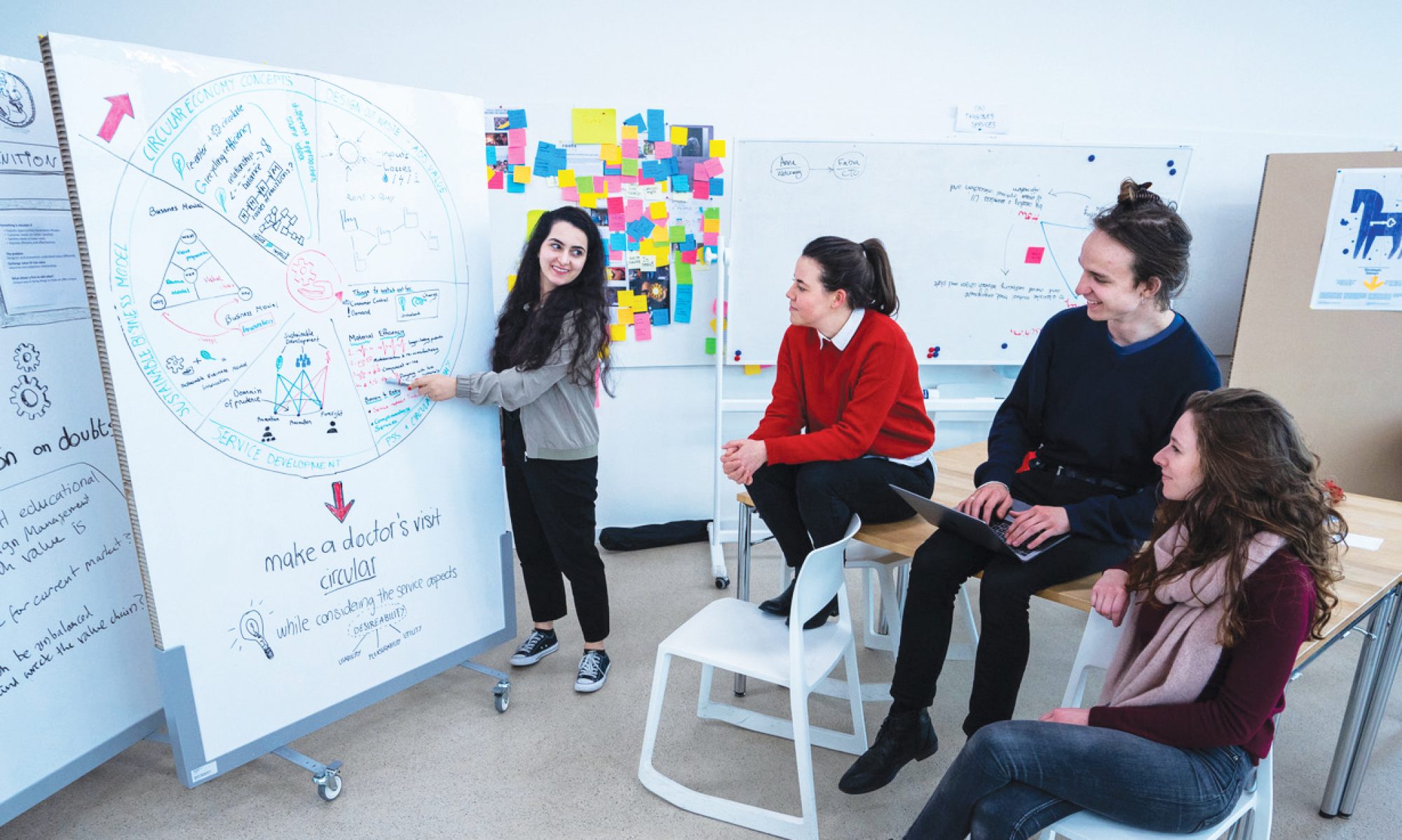
How can we break the stigma and change the perception of depression?

Depression can affect everyone – an introduction to the topic

“My world falls apart, crumbles, the centre cannot hold. There is nowhere to go.” 
― Sylvia Plath, The Unabridged Journals of Sylvia Plath

In Switzerland one person out of seven experiences depression symptoms at least once during their life (FSO, 2020). Although depression is a widespread disease, it still remains quite little known and often misunderstood. Experts state that a diagnosis is fundamental, as non-treated depression can lead to unnecessary suffering and may endanger those who suffer from it. Depression can affect everyone and has a profound impact on individuals’ quality of life. This blog post aims to raise awareness about this disease and, with a 3-step guide, gives tips about how to support a person who shows depression symptoms. In addition to this, I will introduce an interesting design management initiative in which I see great potential to decrease the current stigma related to this topic. At the end of this post I will provide you with links to learn more about this complex, yet highly relevant subject.

A brief outlook: What is depression?

The World Health Organization (WHO) defines depression as a mental disorder in the form of persistent sadness and a lack of gratification in previously pleasing activities and events. On the occasion of the World Mental Health Day 2017, the WHO published an illustrated story that portrays depression with the metaphor of a black dog (link). Complex interactions between social, psychological and biological factors play a crucial role in the causes of depression. Did you know that depression can be experienced in many different ways? Some can be affected by a single episode in their life, while for others is a recurring evil. Depression disorders can be triggered as a consequence of a particular event, or the result of an extended period of overload. But not only: depression can hit like a thunderbolt. This link will tell you more about the symptoms of depression.

Why is depression so stigmatized in our society?

The great pressure we experience in our everyday life has a severe impact on our mental health. At this point, it is worth reflecting on the fundamental role that society plays in our lives. We are constantly asked to meet expectations and aspire to perfectionism. This constant pressure may hinder us to understand who we are and what values we want to pursue. On one hand, we build ourselves a life that does not take into account our weaknesses and insecurities. On the other hand, the expectations set by other people create stress and anxiety. We may end up living a life that does not reflect who we want to be, and this may lead to continuous, growing frustration and unfulfillment. We do not recognize that we are pursuing goals imposed by society. And, once we achieved them, we eventually realize that this may not be what we wanted. Individuals might not be confident enough to externalize their feelings as well as admit and communicate their weaknesses. We struggle to ask for any help because it seems like there is no space for frailties in our culture. Society tends to minimize the problem or does even not acknowledge it. As a consequence, those who suffer from depression symptoms may feel lonely and helpless, stuck in their sense of guilt and discomfort. How can we overcome the stigma associated with mental disorders?

The value of using the correct language when talking about depression

Scarce information, as well as prejudices and fear, may hinder depression recognition and treatment. To overcome this stigma, we must recognize the importance of a correct use of the language. For instance, we must make sure that the term depression is not downplayed or misused. A proper language and approach around the topic will change the perception of depression for both, those who suffer from it and those who are around and may offer their support. The goal is to make depression something of public domain, a common imagery that can happen to everyone at any time. And to do this, depression must be addressed directly, without futile twists and turns. Talking about it freely and correctly is the first step to recovery. Of course, it is easier said than done: the journey is long and requires great will and commitment from people. How can we do that? The following section introduces an initiative held between May 2019 and January 2020 in Ticino which is a great example of how design management can contribute to address this societal challenge.

A look at the project “Depression: Let’s talk about it!”

The campaign “Depression: Let’s talk about it!”, has been ideated and promoted by the Department of Public Health of Ticino in collaboration with L’ideatorio (a laboratory of Università della Svizzera italiana). This initiative aimed at the general public and consisted in a series of events that combined experts’ interventions with different disciplines such as theatre, cinema, literature, and medicine to create a new language and bring the audience closer to the theme of depression. As this initiative caught my attention and interest, I tried to get access to more information and had the opportunity to interview one of the promoters. The idea behind was to experiment with something new moving away from the traditional conference style, that would most likely catch the interest of those who are directly affected by depression, excluding most of the population. The objective was to provide a platform to listen to professionals, share testimonies, and encourage the public to reflect on how essential it is to be aware of this disease. More in general, it was conveyed the importance of understanding that depression is a disease that needs to be addressed…the sooner, the better! The biggest insight of “Depression: Let’s talk about it!” was that it is vital to actively act and reach out to people, without expecting that they will be the ones looking for you. The challenge is to be able to integrate the theme in events and environments where also people not directly affected by this disease can be addressed.

How to support – a 3-step guide

Depression is a recognized illness. Addressing the disease is the first step toward recovery and being able to capture the signals is an essential point to start from. Here is a 3-step guide that will give you a first brief outlook of how to behave in case a relative or a friend shows depression symptoms.

  1. Create a non-judgmental environment

Listen carefully and avoid downplaying the disease. This could make feel the person not understood, as well as increase the sense of guilt that may worsen the problem. Also, do not underestimate and neglect discomfort: try to be receptive and to create a non-judgmental atmosphere where the person feels at ease in sharing his or her thoughts, fears and emotions. In such situations, it is important to have someone to trust and who gives the chance to open up. Keeping things in can be harmful!

  1. Make it a habit to talk

Individuals suffering from depression may often ask themselves whether what they are experiencing is normal or not. For this reason, it is important to talk as freely as possible and confront each other. To help this happen, try to make it a habit to freely talk about feelings and emotions. Eventually, try to support and guide this person to seek external help. In case the person does not accept professional support right away, try to tackle the issue during critical moments, such as crisis, when the person seems to need help most. As every depression case is unique, there is no manual to learn how to behave in such circumstances. If the person seeks help, it may be useful to get in touch with the treating physician and ask for advices (of course, without invading privacy).

  1. Take care of your personal mental health

Last but not least, remember to take good care of yourself too! Trying to help out others is a noble action but requires a certain amount of energy and efforts. Therefore, it is essential to make sure you feel strong enough to face the situation and are able give the support this person deserves. This link will provide you with tips of how to take good care of your mental health.

Below you can find further readings and helpful sources to get more insights about this complex, yet highly sensitive and relevant topic.

Sources and helpful links:

Federal Statistical Office (2020). Health. Retrieved from https://www.swissstats.bfs.admin.ch/collection/ch.admin.bfs.swissstat.en.issue201415431900/article/issue201415431900-01

Keck, M. E. (2017). Depression. Retrieved from https://depression.ch/content/5-informationsquellen/2-downloads/brintellix_patienten_broschuere_depression_i.pdf (Italian)

L’ideatorio (2019). Depressione, parliamone! Retrieved from https://ideatorio.usi.ch/progetto/depressione-parliamone (Italian)

Psy-Gesundheit.ch (2020). Retrieved from https://www.psygesundheit.ch/de/

World Health Organization (2020). Depression. Retrieved from https://www.who.int/news-room/fact-sheets/detail/depression
Will Design Managers be Replaced by Machines? Towards an AI-powered future

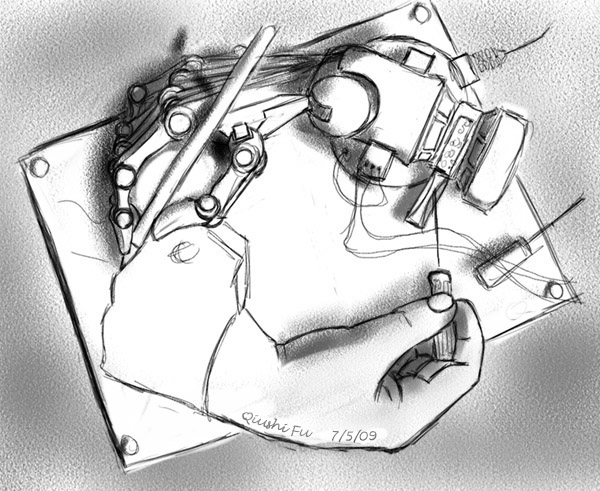
Hand drawing robot

Image: Qiushi Fu  

Humanity depends on technology more than ever before. We no longer remember phone numbers because we have everything saved on our phones, and we no longer use a map because we let a navigation app do the work for us. Machines have been taking over human roles since the industrial revolution, and with artificial intelligence (AI) systems, even complex roles could be done by machines. Would that be the case with design managers? And what does AI even mean?

AI: The Basics

Artificial Intelligence is a field in Computer Science that focuses on developing computers that can make informed decisions independently. The term artificial intelligence was first coined by Stanford researcher John McCarthy during the Dartmouth Conference in 1956. McCarthy defined the main mission of AI as making machines “use language, form abstractions and concepts, solve kinds of problems now reserved for humans, and improve themselves” (Hammond, 2015).

Although the term was coined 64 years ago, the real flourishing of AI started only recently. This happened for several reasons (Hammond, 2015; Kim et al., 2019):

  1. Increased availability of data – more accessible data helps to train AI by enabling it to learn from many examples.
  2. Increased computational resources – computers are cheaper, stronger and faster; hence, they can cope with huge amounts of data.
  3. Increased use of machine learning (e.g., deep learning) – we do not need to write rules for machines to follow. Instead, machines can be trained and learn these rules automatically.

The development of AI will require the openings of new jobs: trainers, explainers and sustainers (Wilson & Daugherty, 2018; WIRED, 2018): every AI system needs to be trained to behave the way it is supposed to. More people would be employed to take care of the AI’s training. If AI is used to help humans make decisions, experts would be employed to help explain the data analysis process done by the AI, preceding the outcome. By explaining the outcome, the explainers would promise the trust between humans and AI systems. Finally, more people will be hired to sustain AI systems. They would make sure the AI functions safely and ethically.

When thinking of AI, what comes to your mind? Do you think about C-3PO and R2D2 or do you think about Siri and Cortana? Well, AI is even more common than that. AI is also when Netflix gives you viewing recommendations according to your previous views, or when a word processor advises you on a better way to write your text.

Okay, now that we’ve covered the basics, let’s talk about design management.

Design Managers & AI

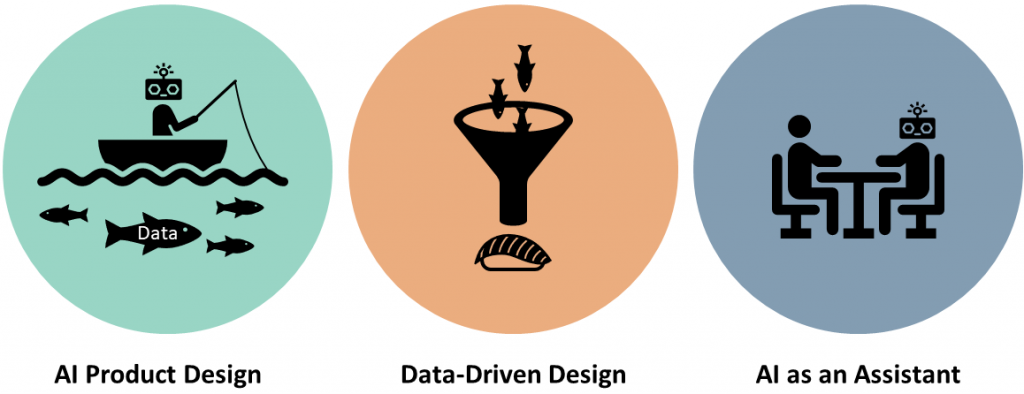
When it comes to design, it seems that there are three areas in which design managers could encounter AI in their daily work:

  1. Data-Driven Design – training AI as part of a design process to innovate new concepts.
  2. AI Product Design – working as part of a team designing an AI product.
  3. AI as an Assistant – using AI as an assistant, with the design manager as an end-user.

    Three areas in which design managers could encounter AI in their daily work.
Data-Driven Design

AI can complement our abilities and help us work better and faster. The goal of many AI-powered systems is not to replace humans, but to collaborate with them. A collaboration in which an experienced human works with AI, trained by data about past successes and failures. AI will be able to give design managers relevant information that could inspire them to come up with innovative solutions.

One of the main parts of the design process, and our main challenge as design managers, is to come with a clear problem definition. Design managers would have to identify and find relevant data for the AI to train on according to that problem definition. Does the data exist and are available? It depends on the case. What is known for sure is the need to improve our skills when it comes to dealing with data, in order to solve customers’ pain points.

AI Product Design

When working on an AI product, design managers should be prepared to work with a diverse team. It requires the effort of people from many fields: data scientists, engineers, developers, designers, human behaviorists, and when it comes to ethics, even lawyers. It would probably put one of the main roles of design managers – integrating – to the test. In addition to the team being multidisciplinary, it should also be culturally-diverse: an AI system learns what we teach it. A diverse team tends to have a wider range of opinions and tends to be more sensitive to gender and culture bias. Cases where AI systems were unintentionally trained to be biased have happened in the past. For example, if an AI is trained to recognize people, but the database it learns from only contains men, women might not be recognized. Working with a diverse team can prevent this from happening.

Design managers would have to learn about the differences between classic human-computer interaction and human-AI interaction, which comes with new challenges and opportunities. For example, users will expect a regular computer to be consistent and predictable, while expecting AI to be less consistent as a result of learning and evolving over time. Part of this would also be about making the interaction with AI transparent, and decide how an AI product might explain itself to a user. If the process to an AI’s outcome is understandable, it could increase users’ adaptability to the product and loyalty to the company.

AI as an Assistant

Virtual assistants can communicate with others to schedule appointments, while chatbots can provide information for many customers at the same time. AI systems are being trained to understand the context of the conversation, and even the tone of speaking, to provide better customer service (Wilson & Daugherty, 2018). AI might not be able to understand emotions entirely, but with the analysis of customers’ choices and behaviors, it could help cut down manpower and give critical feedback to design managers.

AI can help design managers be more flexible and offer product customization to customers. No more “Any customer can have a car painted any color that he wants, so long as it is black” (Henry Ford), thanks to the AI’s ability to adjust to changes. In addition, it could enhance customer delight by providing tailored experiences according to their past preferences (Wilson & Daugherty, 2018).

What’s Next?

Design managers are trained to cope with uncertainty and become familiar with innovative endeavors. AI is exactly it. We must adapt to innovations that could augment our abilities. In a way, we have to keep improving and evolving, the same way that AI systems do.

As design managers, we need to learn about AI and adapt our role accordingly: we need to discover what AI could help us do, what AI might not be able to do, find this gap and fill it. For example, while AI can analyze a large amount of data, it still cannot come up with original ideas without a human making the data available and defining specific parameters for it. Even better, design managers should be the ones to recognize AI as a trend that can add value to the business. If a specific business is not yet aware of the benefits of AI, design managers can be the ones pushing the business to be more AI-savvy.

So, should we be worried? Not if we’re prepared. As AI becomes a common tool to improve businesses and keep their competitive advantage, it is possible that soon we would all have the opportunity to work with AI systems. Norman (2013) sees the ability to collaborate with machines as an opportunity for humans to become smarter, faster and stronger. Machines and AI systems can free our minds from the small things that waste our time and allow us to focus on the important ones. We will still use our brains; it is just that the tasks will be different.

Want to start familiarizing with AI? Here is a good place to start: https://uxplanet.org/designer-friendly-resources-to-study-ai-and-machine-learning-1-6106e257faeb


Resources

Afshar, V. (2018). AI will transform product management. Retrieved from ZDNet: https://www.zdnet.com/article/ai-is-transforming-product-management/

Cossins, D. (2018). Discriminating algorithms: 5 times AI showed prejudice. Retrieved from NewScientist: https://www.newscientist.com/article/2166207-discriminating-algorithms-5-times-ai-showed-prejudice/

Dewalt, K. (2017). Product Manager is the Hardest AI Position to Fill. Retrieved from Prolego: https://blog.prolego.io/product-manager-is-the-hardest-ai-position-to-fill-9d753bf4cfcc

Hammond, K. (2015). Practical Artificial Intelligence for Dummies. Hoboken: Wiley.

Kim, S. G., Yoon, S. M., Yang, M., Choi, J., Akay, H., & Burnell, E. (2019). AI for design: Virtual design assistant. CIRP Annals, 68(1), 141-144.

Norman, D. (2013). The design of everyday things: Revised and expanded edition. Basic books.

Oh, J. (2019). Yes, AI Will Replace Designers. Retrieved from Medium: https://medium.com/microsoft-design/yes-ai-will-replace-designers-9d90c6e34502

Vorvoreanu, M., Amershi, S., & Collisson, P. (2019, March 5). Guidelines for Human-AI Interaction- Eighteen best practices for human-centered AI design. Retrieved from Medium: https://medium.com/microsoft-design/guidelines-for-human-ai-interaction-9aa1535d72b9

Wilson, H. J., & Daugherty, P. R. (2018). Collaborative intelligence: humans and AI are joining forces. Harvard Business Review, 96(4), 114-123.

WIRED (2018). AI and the Future of Work. Retrieved from WIRED: https://www.wired.com/wiredinsider/2018/04/ai-future-work/

Icon Credits

Thank you to Andrew Doane (Fisherman), alberto galindo (Funnal) and Oksana Latysheva (Robot head)  from the Noun Project.

Get Blooming Sustainable

How Consumers can Demand Sustainability from the Floral Design Industry

Worldwide, flowers are gifted as a romantic gesture, in in show of sympathy, to congratulate, and as a get-you-off-the-hook card when you haven’t been to visit your Nonna in far too long. You know it, your Nonna knows it, but when she sees those pretty little faces smiling up at her, all is forgiven “Sono bellissimi”. They are a quintessential part of celebrations like weddings and events, launches and conferences. We find them at receptions, in hotel lobbies, in shop windows. Once we begin to pay attention, we realise that flowers are all around us. Floral design takes many different forms and caters to many different needs, but it has one big problem: for all appearances of beauty and innocence, it is one of the bad guys when it comes to polluting the environment.

Now you might be asking yourself the question, “so, should people stop buying flowers?” No! On the contrary I want more people to buy flowers (my boyfriend included) and support their local florists and farmers. But it needs to be done consciously.  As a consumer, you have a responsibility and the ability to make a change. This blog will give you tips on what to look for and provide some alternative suggestions which will help to make sure that your flowers are sustainable.

Only upon entering the field of floristry did I realise the negative impact flowers can have on the environment (and on your eyes – the audacity some people exhibit when combining colours is mind-blowing, but that’s not important here). In my training I already began to notice that we were creating an awful lot of waste. We had to buy and use flowers from the markets, stick them in floral foam in rigid strict structures, and wrap them in hideous paper, all for the sake of practicing floral design. They always ended up in the bin. I used to try to prolong the lives of my creations by giving them to my Mum, poor thing. Basically, the only thing that changed when I started working was that we didn’t see them end up in the bin, because they went through the customer first. It was only when I started to read into the topic, and experiment in my free time, that I realised there was an alternative to creating so much waste. The practices that I mention below, are used in most mainstream traditional floristry and can be replaced with more sustainable alternatives.

Many florists use a green foam, called floral foam or Oasis, as a base for their arrangements. This gives florists a lot of control as the flowers are held in exactly the right place. Floral foam soaks up water, keeping flowers hydrated for several days, and providing great stability for arrangements. But there is a high price to all this convenience. The foam is a plastic made from phenol and formaldehyde that isn’t biodegradable. It is rarely used more than twice because after the first use the foam resembles squidgy green Swiss cheese and no longer holds the flowers effectively. The used foam ends up in landfill and the residue in water systems, where it causes harm to organisms. Many toxic chemicals are involved in the making of the foam and it contains known carcinogens, making it harmful for humans too, not just the environment. The highest risk comes from cutting the foam when it is dry, and if it is eaten, so beware of curious toddlers looking for a snack. (Mannix, 2018)

So how can you avoid this mean green foam? The first option is to buy cut flowers, which are not in any sort of base, that can be put into your vase of fresh water at home. Alternatively, you can look for arrangements that use a chicken wire base or a floral pin frog, a device placed at a bottom of a vase that holds the stems in place. If you’re unsure, talk to your florist.

Another important thing to look out for is where your flowers come from. The four main exporters of cut flowers worldwide are Kenya, the Netherlands, Colombia and Israel (Tree- Nation, 2020). It is not only the shipping of these flowers all over the globe that leave a significant CO2 footprint, but also the growing process. In fact, flowers which are grown in Europe, such as the roses grown in the Netherlands, produce more CO2 than those grown in Africa and transported to Europe. This is because while the African climate supports the growing of flowers, European flowers must be grown in hothouses which have to be heated, especially during the colder months. They are also artificially lit, warmed and cooled, to simulate a conducive environment and this uses an immense amount of energy. A study conducted in 2007 found that growing 12,000 roses in Kenya created 6,000 kg of CO2 emissions, whereas the same amount grown in hot houses in the Netherlands produced an astounding 35,000kg of CO2. (Whelan, 2009)

A critical factor to be aware of are the pesticides that are used to keep the flowers bug-free. Of course, no one wants a half-eaten flower, but no one wants to be breathing in toxic pesticides when they stick their nose into a luscious looking rose either. Especially in third-world countries, the chemical laws are so lax that growers even use substances which have been banned in Europe. Aside from the risk this poses to consumers and florists, the most significant risk is for farmers that handle these chemicals daily. These toxins often end up in the earth and in waterways, causing serious harm to the species that live there. If you’re into composting, you should never throw cut flowers that have been treated with pesticides into your compost bin, otherwise you’ll have some very unhappy worms (Wainwright & Day 2014).

 So how can you make sure your flowers aren’t being flown first-class in special energy intensive cooled conditions, drenched in pesticides, to get to you? By buying local instead. Find florists that purchase only from local suppliers or visit that flower field down the road where you can pick your own. This eliminates all of the excessive energy consumed by transport and supports local farmers at the same time. However, buying local doesn’t guarantee that your flowers are pesticide-free. Although it is comforting to know that as chemical regulations in Switzerland are stricter than in Kenya for example and that you won’t end up with any agent orange on your flowers, there is an even better alternative: buy organic! Again, organic doesn’t mean entirely pesticide-free, but here the regulations are even stricter and only non-synthetic products can be used (European Commission, 2018). Buying local also means buying seasonal, which brings the added joy of variation. In winter you can buy local tulips and hyacinths, in spring poppies and freesias. Summer offers many luscious heady flowers and in autumn colourful plump dahlias are the way to go.

One last thing to be aware of is the wrapping that your flowers come in, most commonly ribbons, coloured paper and cellophane sheets. These are generally used once and then thrown away, just like your Christmas present wrapping. This is a really careless waste of resources. Again, here there are alternatives that are even now being explored by the international florist network giant, Interflora. They now have their own range of biodegradable cellophane, recycled ribbons and eco-friendly gift boxes (Interflora, 2020). Alternatively, your florist might have bark, or hessian for wrapping, both of which are biodegradable and can add a natural touch to a bouquet. You can also take your flowers naked without any wrapping at all, if they’re not shy. The important thing is to always ask what options are available, and to know that it is your choice.

Thankfully, sustainable floristry is a growing trend in the industry. Natural arrangements that follow the form of the flowers and do not require floral foam are becoming the fashion. Buying local and seasonal is becoming the cool thing to do. Most importantly the awareness of the impact that the floral industry has on the environment, is growing. Farmers, florists and consumers alike are taking action to turn this industry into one which works with nature instead of destroying it. This means that for you as a consumer it will become easier to find florists that work in more sustainable ways, and to consume more consciously. I hope this blog has helped you to know what to look for, and how to choose sustainable the next time you buy flowers.


Sources:

European Commission, 2018, Pesticides in agriculture, https://ec.europa.eu/info/food-farming-fisheries/sustainability-and-natural-resources/biodiversity-and-land-use/pesticides_en

Interflora, 2020, Sustainability at Interflora, https://www.interflora.co.uk/content/sustainable-packaging/

Liam Mannix,  2018, Floral foam: How bad is the stuff at the bottom of your roses?, https://www.smh.com.au/national/floral-foam-how-bad-is-the-stuff-at-the-bottom-of-your-roses-20180212-p4z02o.html

Tree- Nation, 2020, The environmental impact of the cut-flower industry, https://tree-nation.com/projects/inside-tree-nation/article/5956-the-environmental-impact-of-the-cut-flower-industry

Wainwright, H., Jordan, C., Day, H, 2014 , Environmental Impact of Production Horticulture, https://www.researchgate.net/profile/Henry_Wainwright/publication/264860153_Environmental_Impact_of_Production_Horticulture/links/57a1f3ed08aeef35741ca372/Environmental-Impact-of-Production-Horticulture.pdf

Whelan, Carolyn, 2009, Blooms Away: The Real Price of Flowers, https://www.scientificamerican.com/article/environmental-price-of-flowers/