How South Korea faced its mask shortage

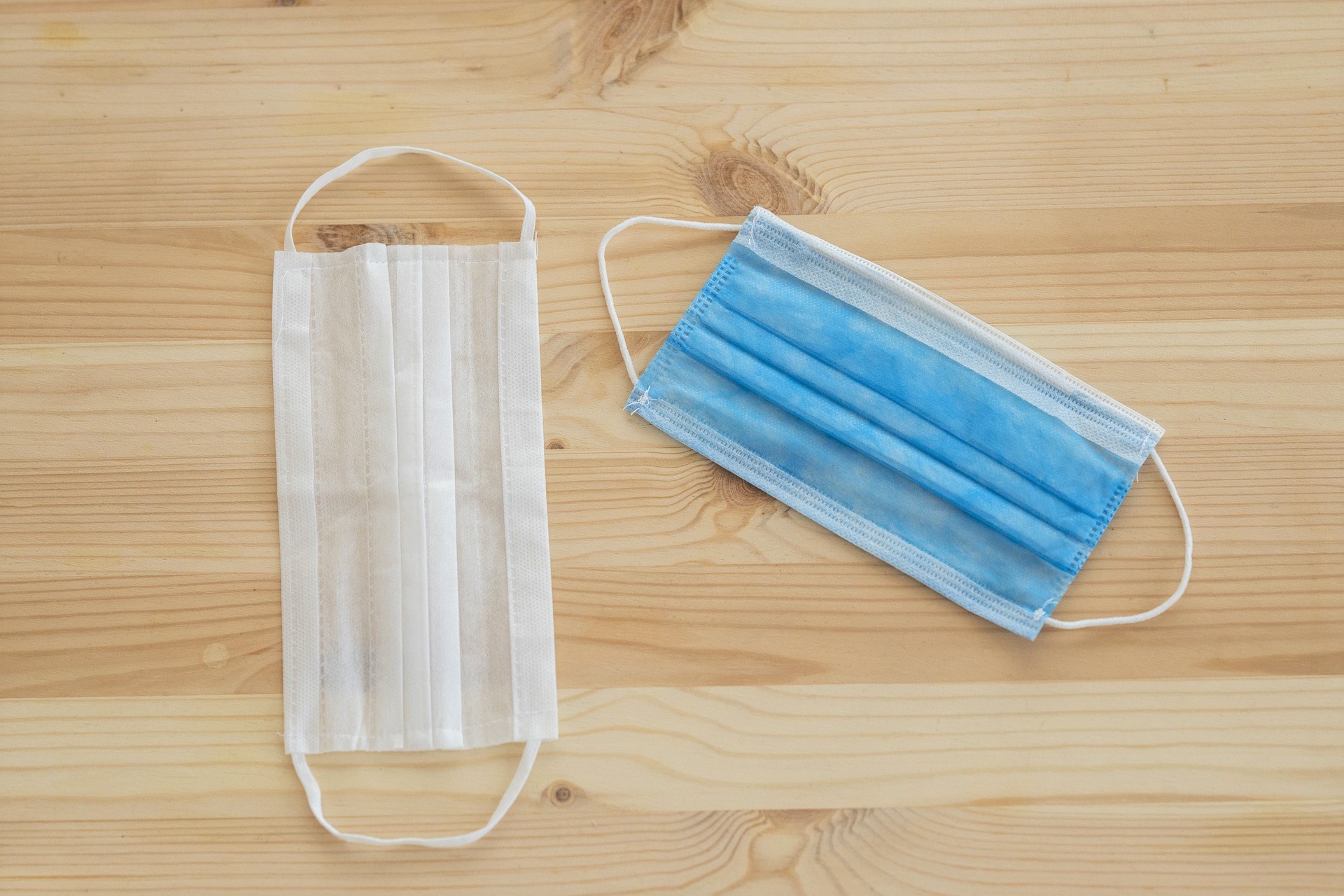
The COVID-19 disease has caused serious problems since it arose in China in December 2019. It has been spreading globally to over 200 countries and is threatening people’s health and the medical systems around the world (WHO,2020). As the number of cases continues to increase, the WHO (World Health Organization) declared COVID-19 a pandemic and announced some guidelines (WHO, 2020). The measures are being taken to overcome this situation depending on the countries. Using face masks is one of them in South Korea. The Korean government recommends the public to use face masks to prevent infection and protect others in the case of asymptomatic persons. This strategy made people buy more masks than usual and caused a new problem: The shortage of face masks. People lined up in front of the pharmacy, the most commonplace to buy masks in Korea, and even the workers in industrial and medical sectors faced the shortages. This crisis led to changes in social and economic areas in South Korea. This paper analyzes the situation and discusses options from the design perspective.


Corona in South Korea

South Korea is located near China and one of the countries infected greatly earlier than European countries. In late February and early March, it started spreading fast by cult people who visited Wuhan in China, the epicenter of the outbreak. They gathered together to attend worship, which caused a number of infections that exploded into thousands. However, South Korea reacted to this crisis with a smart, aggressive public health system (Cottlieb, 2020) and the amount of newly infected victims decreased.

Background culture about Mask in Korea

So, why has a shortage happened in South Korea? The cause lies in the increasing demand. Before discussing the reasons in more detail, we need to look at the background of the Korean situation. Because of air pollution (micro dust), it is very usual for non-medical people to use face masks in the street, and masks have become a part of fashion – we can often see Korean celebrities wearing them. Therefore, unlike European countries, using a mask was already ordinary and ubiquitous before the coronavirus broke out in other countries. This is why Koreans easily accepted the government’s recommendation (Wong, 2020). Moreover, the government’s initial response was ambiguous, because the coronavirus was new and unpredictable. There was not enough data about the benefits of face masks against viruses and instructions for using masks differed several times. In this confusing situation, the public chose to wear masks as a symbol (Kang M, 2020). This made a social norm, and people who don’t wear masks are criticized and considered as a person without responsibility for themselves and for communities. This atmosphere encourages more people to wear masks and acts as a behavioral nudge to remind the importance of personal hygiene (Wong, 2020).

Why has it happened?

First of all, there lies a shortage of raw materials. Masks are produced with simple processes. Only simple labor is needed such as attaching a filter, attaching non-woven fabrics, folding. The supply of raw materials is directly related to production capacity. The main material of the mask is Melt Blown (MB) filters and the problem was that Korean mask production companies used MB filters which were imported from China – about 30% in total (Kim, 2020). Because of the spreading of the virus in China, supply was stopped as the Chinese government prohibited the export of the filters. Although domestic filter companies increased production, the quantity of domestic production was not enough to meet the needs. Korean government started to support filter manufacturers to expand facilities, however, it had been already a month since the mask problem was issued.

Secondly, mask profiteers appeared. As mask demand continued to grow, some people tried to make a profit by hoarding masks. Some distribution companies proposed an unfair transaction to production companies, stocked up masks and sold them at a much higher price. Not only distribution companies, but also individuals used this strategy to feed their greed and avoid taxes. Because of those, who consider this crisis as an immoral opportunity, a large number of the mask,s which were provided to the public disappeared. This caused confusion over the fair supply of masks.

For these reasons, supply was unstable, despite demand increased rapidly. It was harder to get a mask and the queue in front of the pharmacies grew longer and longer. Immoral sellers raised their prices to exorbitant costs. People became angry about this situation. It was also stressful to pharmacist. Some people committed physical violence and insults against them, expressing their anger. Something had to be done to overcome this crisis.

How South Korea solved these problems

On 5th March, the government decided to directly intervene in the production and distribution process of the supply of face masks. The government takes care of 80 percent of the national face mask production every day. Out of these, 2 million are distributed first to medical institutions and the rest of them are sold to the public at a relatively low price of 1,500 WON each (about CHF 1.19) via public retailers such as pharmacies, post offices, etc(Kim, 2020). Moreover, a 5-day rotation system has been implemented, which allows people to buy two masks per week on specific days, depending on their year of birth. For example, people who were born in 1998 and 1995 have to buy masks on different day and ID cards must be shown. With this system, inventory status services are offered to the public via mapping apps, enabling people to check real-time numbers of purchasable masks in pharmacies. In the meantime, to reduce hoarding, the government catch mask profiteers,  imposes a fine, and support the production of raw materials for masks.

Besides the government policies, individual and organizational contributions have also occurred. People donated face masks to those in need such as the elderly and organizations started some campaigns to share masks and offered a kit to make DIY masks. Companies also took action. Samsung, the biggest brand in South Korea, has supported mask manufacturers by dispatching experts and setting up equipment to increase production capability (Song,2020). Some companies came up with new ideas and developed new business. A company, named Desizon, designed cases to enable the mask to reuse, keeping them clean (Kim, 2020). Moreover, a upcycle total fashion company ‘Beltaco’ plans to work with Daegu Metropolitan City to develop a method of making masks with microfiber, which is often used for blankets, and provide them to the public (Na, 2020). Besides them, some companies provide face masks at a lower price than before, causing a stable supply.

What could be suggested?

Overall, South Korea is said to be one of the countries that flatten the curve of new infections and contain the spread of coronavirus successfully. Several things had to be done in order to create such a situation. From analyzing foreign mediums, fast implementation, extensive testing, tracing, isolation, and surveillance were helpful to beat the disease (Fisher, & Choe, 2020). In this shortage crisis, the government fast intervention seems to be proper for a stable supply of masks. Along with other policies and the participation of citizens, it could prevent the worst.

However, there are still some points to improve. First of all, as the government managed masks publicly, mask manufacturers suffered from overtime and loss of profits to produce masks at lower prices. Secondly, the several changes in the guidelines for masks from the government caused social confusion. Furthermore, the government’s policies are effective, though, they still have low accessibility to the elderly and disable people who are restricted from free moving to buy masks. Even if they line up in front of a pharmacy, they risk being exposed to the virus. Last but not least, the environmental side also should be considered. Increasing number of using disposable masks has led to a lot of waste. Harmful substances are generated when they are incinerated.

My suggestion for future actions in Korea would be to control who uses masks and buys masks better. Masks should be controllable, especially when exposed to the public in a disaster situation because it directly affects people’s lives. And above all, it should be accessible for everyone, including the medical staff. It is vital to especially focus on the elderly and the disabled when it comes to accessibility of face masks. If a new system is designed to deliver supplies more safely with high accessibility, we will be able to react more wisely when disasters strikes again. One other solution would be to focus on improving the design of face masks in terms of durability and sustainability. One would not need to buy so many new masks, the general mask used in Korea is disposable. The situation would improve if the masks were designed to last for a week and were able to be washed after that so it could be used again and it goes into a life cycle process. If this were to be implemented, it would solve a lot of problems with the lack of this product and also improve its position within sustainability matters. These suggestions are possible only when the government actively supports the mask industry. The government could encourage manufacturers to develop their production and collaborate experts from various fields with benefits. Moreover, workers’ rights and a sufficient supply of raw materials should be guaranteed.

Individual right and freedom is also important and should be guaranteed. So we should have a balance between individual freedom and national intervention, which are both valuable. This crisis showed the weakness of Korean mask production and the system, whilst it showed room for further development. It is time to change the perception of the mask and move forward.


sources:

Wong, T. (2020). Coronavirus: Why some countries wear face masks and others don’t. Retrieved from: https://www.bbc.com/news/world-52015486

Kang, M. (2020). What are the thoughts of experts on the “Mask War”? Retrieved from: https://www.the-pr.co.kr/news/articleView.html?idxno=44405

Kim, W. (2020).  Three causes about mask crisis, mentioned by CEO of a mask production company. Retrieved from: http://www.hani.co.kr/arti/society/society_general/931379.html

Naver, (2020). 5-day rotation system. Retrieved from:

https://terms.naver.com/entry.nhn?docId=5926931&cid=43667&categoryId

N,d. (2020). The facts that you should know about 5-day rotation system. Retrieved from:

https://www.bbc.com/korean/features-51797501

Lee, D. (2020). Why people stick to mask? Retrieved from:

https://www.pressian.com/pages/articles/281395?no=281395&ref=kko

Kim, E. (2020). How South Korea Solved Its Face Mask Shortage. Retrieved from:

https://www.nytimes.com/2020/04/01/opinion/covid-face-mask-shortage.html?searchResultPosition=2

Fisher, M & Choe, S. (2020). How South Korea Flattened the Curve. Retrieved from:

https://www.nytimes.com/2020/03/23/world/asia/coronavirus-south-korea-flatten-curve.html?searchResultPosition=4

Kim, J. (2020) “Government, please stop…” Mask operators ‘Scream’. Retrieved from:
https://www.msn.com/ko-kr/news/national/%EC%A0%95%EB%B6%80-%EA%B0%91%EC%A7%88-%EC%A0%9C%EB%B0%9C-%EB%A9%88%EC%B6%B0%EC%A3%BC%EC%84%B8%EC%9A%94%E2%80%A6%EB%A7%88%EC%8A%A4%ED%81%AC-%EC%82%AC%EC%97%85%EC%9E%90%EB%93%A4-%EB%B9%84%EB%AA%85/ar-BB10QSsi

How Not To Go Insane During Quarantine

What the health!? The magnitude of the impact the coronavirus currently has on our lives exceeded what most of us would have imagined just one month ago. The people who are healthy and not in the risk group may only have realized the seriousness of the situation when increasing number of businesses and schools were forced to shut down. Unless you know someone who belongs to the risk group or have health problems yourself, the situation may still feel a bit surreal.

It has been four weeks now since Lucerne University of Applied Sciences and Arts closed its doors. The first week was announced as a semester break so the school could figure out how to proceed with remote learning. In the second week the studies already continued via Zoom meetings.

As it is now a completely different lifestyle, it is important to adapt in order to stay healthy. This article gives input on how to design your day in quarantine to stay healthy as a design management student.

Structure

Before the quarantine, the class schedule forced you into a clear structure during the week. You woke up early and had to go to bed at a reasonable time. Depending on the duration of your commute this resulted in very limited free time.

As we are no longer allowed to go to school, this strict schedule disappeared overnight. Suddenly, we have so much more time on our hands. We can plan every day to our convenience, apart from scheduled zoom meetings. As long as there is a working internet connection you can attend class from anywhere in the world, even Mexico.

It now requires discipline to create your own schedule. And it is important for your health to do so.

It helps to plan your days in advance. It does not have to entain every minute but a general idea of what needs to be done and at what time. Creating routines such as a morning and evening routine help keeping your days structured. To start your day, it might be a good idea to do the same routine you did when leaving for school, including dressing to leave the house. This will help get you into a state of productivity when required. Although, you may shift your daily rhythm to your liking. As a night owl myself, I am now finally able to adjust my schedule completely to my preferences. Furthermore, eat healthy and regularly. Plan breaks for meals instead of eating all throughout the day, unless you want to gain weight, obviously. Also, create a habit of exercising because during quarantine you will be much less active in general.

It may be a challenge to differentiate study time with leisure time when studying from home. In order to avoid getting stressed out or overworking yourself, set clear work time and time off. During time off, relax and do not think about your pending tasks.

Physical Health

It is well known now that you should stay at home. When before you at least walked to school and back, now you don’t have to move at all if you don’t feel like it. This means that it is especially important to get moving.

Physical activity is directly linked to your physical but also mental well-being. Immediately after even a moderate physical activity, adults can benefit from reduced short-term feelings of anxiety. When exercising on a regular basis, you will reduce your risk of depression and anxiety and you will sleep better (CDC, 2020).

At the very least, go for a 30-minute fast-paced walk every day. Paul T. Williams, a statistician at Lawrence Berkeley National Laboratory, published a study about the importance of walking fast versus slow. You can read about it on the New York Times blog:

Just make sure to be aware of the health recommendations regarding the coronavirus and keep some distance between yourself and other people.

If you feel like doing more, especially if you were more active before, I suggest you look up a home workout according to your goals on the internet. If your goal is building muscle and increasing overall strength, I recommend you this full-body bodyweight program:

Jeff Cavaliere is a pro athlete trainer and physical therapist and owner of Athlean-X. His youtube channel offers countless valuable videos on strength training, nutrition, stretching and much more.

As we now spend a lot of time sitting to attend online class and work on assignments, it is very important to create an ergonomic workspace. To sit on the couch attending a Zoom meeting can be relaxing and is not wrong. But when you spend several hours on the computer, it is necessary to keep your health in mind. Especially your back will thank you for not sitting in a crouched position for a prolonged time. Additionally, sitting straight and ergonomically can help your workflow. If you suffer from back pain or want to prevent it, I suggest to you these three small exercises which you can do every day:

Check out the youtube channel of pain-specialist Roland Liebscher-Bracht for more quality videos about pain.

You are what you eat. Eating healthy should be the norm for you regardless of quarantine or not. Bad food decreases your wellbeing, physically and mentally. Eating lots of vegetables and fruit in a balanced diet will make you feel better.

One of the most important aspects of health in general is sleep. In terms of quality as well as quantity. If you create an individually structured day as advised above, it should be no problem to plan at least 7.5 to 9 hours of sleep per night. With the quantity locked down, it is now about quality. There are a few things that can help you increase the quality of your nights rest. Firstly, regularity. Try to go to sleep and wake up at around the same time every night, weekend or not. Your body will recognize and appreciate the pattern, and you will feel more rested. Secondly, create an evening routine which you repeat everyday before going to bed. This will let your body and mind know that you are about to go to sleep and helps them shut down. And thirdly, reduce screen time before bed. Avoid using your phone or computer at least half an hour before bed, the earlier the better. Instead, you could read a book or write something.

Mental Health

Having this much time at home at your disposal, all of a sudden, means that you will need to find ways to pass it. Ideally, you already have hobbies you can practice at home. If not, this might be the time to start. I will give a few recommendations which will support you to stay grounded during these tumultuous times.

I want to start off with creativity. Creativity is an expression of yourself and helps you keep connected to and discover yourself. We are studying design management, which means we already practice creativity at school in some way. If you don’t already have a creative hobby, start one. Create some art, design something or cook a new (healthy, mind you) meal. Learn an instrument or how to sing. Pick up knitting. Start your youtube channel. There are endless opportunities. And the restriction of staying at home might even make you more creative in finding a way to express it.

The circumstances around COVID-19 are obviously harming many people in different ways. But it is also an ideal opportunity to practice gratitude. Take time to appreciate all the things you did that were normal to you and are now not possible anymore. Be grateful for everything going for you. It’s more than enough. Look into yourself and reflect on your life. Did you live your life consciously or do you feel like you were breezing through life? Find the right place in your mind where you are happy and grateful. Try mindfulness meditation if you have not yet.

Maybe having this much alone time is not easy for you and you cope with excessive consumption of unhealthy food, media, alcohol, cigarettes or other drugs. Avoid this and instead create a healthy lifestyle with the tips from this blog post. Taking breaks from reading and watching the news may help, if they create fear and stress in you.

Eventually, I want to address our social life. In the media Social Distancing is being promoted. I think that is worded poorly and should be called Physical Distancing. We are social animals and if we distance ourselves from others, it has a negative effect on our mental and ultimately physical health. Keep in contact with the people in your circle. The possibilities are there, we are connected to most people around the globe. Don’t isolate yourself socially, but physically.


Sources:
CDC (Centers for Disease Control), (2020). Benefits of Physical Activity. Retrieved from: https://www.cdc.gov/physicalactivity/basics/pa-health/index.htm accessed 10.04.2020

What regular home office workers don’t tell you

What regular home office workers don’t tell you.

Regardless if you are used to working from home regularly or every now and then, due to the current COVID-19 situation, many of us had to quickly switch in desks for the dining table and a swirl chair for the sofa. For some it has been easy to set up a home office in a free room, but some are still struggling to find out how their laptop cable can reach the plug without rearranging the whole bedroom. Based on regular home office workers, I have collected together the most valuable tips on what is most important when designing your home office, regardless of your situation. Moreover, you will learn how to manage yourself in this new working environment, to be motivated and to work productively.

It’s all about the set up

This depends entirely on your personality and what space you have available. Most important is to have a space in which you can set up a desk and chair, where you can install your laptop and equipment without having to put it away every couple of hours. Basically, you should create a clear demarcation between your study/work area and the family’s living space. Ideally, you should have your own study, which you can lock up if necessary. This way you prevent your children or other people from entering the room and possibly disorganising and at the same time, allows you to work undisturbed. Nevertheless, it is most important that your space should really have an office character. It should be a place where you can focus on your work and implement projects. And even if it is just a large desk in the living room – an area where you can store all your important utensils and have them at hand immediately. Having your own office or a well thought-out work corner really makes a great difference and is the first step towards more productivity and organisation.

Wire management goes a long way

Tumbling and frustrating over tangled cables and wires happens quickly, but can be prevented easily.  Basic cable management can make a significant contribution to improving your office aesthetics and is quite cost effective as well – you only need to manage a few brackets and cable ties to tangle up any annoying cable clutter. Ideally, arrange yourself with your company about which equipment you must pay for and which they provide. This often are technical equipment such as laptop, printer, external hard drive, various software products, shredders, etc.

Let there be light

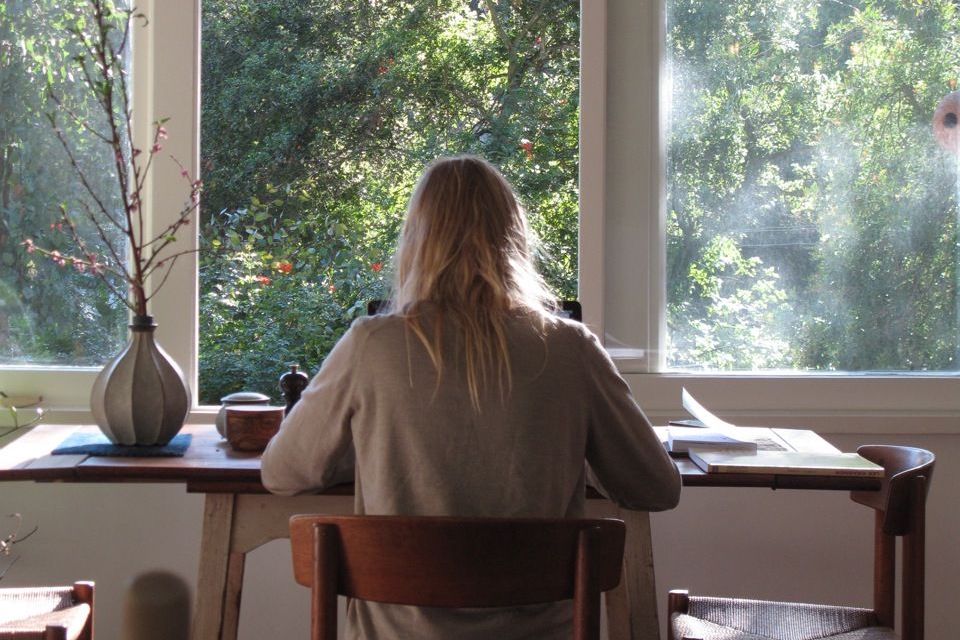
The lighting conditions in the office also play an important role. The right lightning provides perfect illumination of the workplace. Make sure that the artificial light on the screen does not dazzle. If this is the case, you either have to move the lamp or rearrange your desk slightly. Pendant lamps are highly recommended, which illuminate the entire room. If possible, you should make use of daylight. At best, place your desk at a 90-degree angle to the window, so that the light comes in from the right or left. Under no circumstances should you place your desk with your back to the window, as the light on causes display reflection, unless you want to leave the blinds on all day, which probably won’t be the case. It is also possible to set up the desk so that you can look outside while you work. Since the desk is probably much lower than the window, you can look outside from time to time, which also relaxes the eyes.

Eat your greens? See them!

Make your office space come alive by adding some greens next to your desk.  Plants will not only add a touch of color to your office space, but will also increase happiness and relieve stress. In fact, it might also remind you to water them every once in a while and that maybe you too, must refill your glass of water every now and then again to stay hydrated and concentrated. Furthermore, even a few plants can increase productivity. Instead of just picking all green plants, chose a plant which is easy to maintain and helps to improve the air quality. The spider plant, dracaena, ficus are beautiful and particularly well known for their air filtering qualities. To find out more, read my latest blog post on plants that are foolproof and have amazing benefits for your well-being.


Fix the attitude

As previously mentioned, the brain tends to allocate rooms with specific tasks. The same way your brain tends to differ its mood depending on your presentation. The idea of working in your PJs sounds great on paper. In reality, this will negatively affect productivity. Think about how you automatically feel like working out when you are in your gym gear, or how you feel tired when you take off your make-up after a long day. Make the effort to brush your hair and teeth, get out of your PJs and wash your face. These are the small routines and habits that make a huge different with your attitude towards your productivity and motivation to working from home.

Manage time before it manages you

As different as we humans are, as different is our way of working. One gets up early in the morning and ploughs through until the afternoon. The other starts his working day around noon and stays in the office until 9 pm. To be able to work productively, you should plan your working hours accordingly.
Despite irregular working hours, make sure to have a certain routine. Plan during which times you have calls and deadlines and then build the rest of the working hours based on when you are most productive and have no other chores. If you first have to discover the perfect time management for yourself, I recommend you to set and try out different schedules. Are you late risers and only get really productive in the afternoon? Then there is nothing to be said against starting your working day at noon. It’s better that way than getting out of bed early in the morning and not getting anything done. You can also set fixed schedules for various tasks. For example, two hours per day for editing e-mails, five hours for blog posts, one hour for taking pictures – depending on what’s on the agenda! It is most important that you are available for your co-workers, boss and customers. Be sure to define fixed working hours. Make sure that within those time you are not getting disturbed. Let friends and family leave a message on the answering machine and call back later. It makes sense to make an appointment with them in advance so that you can schedule accordingly. Everything that you don’t manage to do until you are personally determined to end and the rest of the work will be done first thing the next day.

Separation preparation

Two reasons why you should buy separate computers for work and personal use: You can claim your work computer as a business expense in your taxes and you can customise the work computers and eliminate annoying applications and software. There is hard work to be done if you use the same computer tables for creating tables as you do to play video games or watch Netflix. If your company doesn’t provide you with a separate computer, be sure to a create a new log in just for work. This way you can also save all data and passwords work-related on a different user

Give yourself a break

Regular breaks are very important. Here it helps to stretch your legs a little, maybe make yourself a coffee in the kitchen or get some movement going by stepping out into the fresh air. If you live alone, make sure to use the breaks to socialise with co-workers, family or friends. If managing breaks is difficult for you, try out the Pomodoro technique, it is a time management method developed by Francesco Cirillo in the late 1980s. It helps to work break your workday into 25-minute chunks separated by five-minute breaks. These intervals are referred to as pomodoros. After four pomodoros, you take a longer break of about 15 to 20 minutes.

Organisational satisfaction

Use lists! Use them to make sure you don’t forget anything. There are many great apps which help to plan and structure your chores and working goals. You should have daily to-do lists but also weekly ones for the long term things. Set yourself goals and write them down. It helps to have a good overview and to be able to see at a glance what’s next. On the other hand, there is nothing like having a good old note block on which the daily business is written. Besides, it’s just a good feeling to be able to “cross out” work that has been done.
If setting goals make it seem hard to reach, try to set several smaller goals, which also leads to a regular sense of achievement. Even a large project can be divided into small stages. This way, you develop even more motivation on the way to the big picture and can already enjoy small professional successes in between. But even here, everyone has to find the ideal way to reach a planned goal. The only important thing is that you don’t give up shortly before and prove to yourself that you can achieve something. Motivation and perseverance are two essential aspects if you want to work organised at home. Everything else comes with time and is a nice “learning by doing”.

Now you can do it too

Regardless if you always had an office room in your flat or if your laptop took over the kitchen table. No matter how long this COVID-19 crisis will go on for, you are now ready for designing and managing your home into the ideal office space. Any how, this crisis will for sure change company’s views on remote working, giving you the opportunity to further create and better your newly designed space.

7 Steps to Prepare for Fundamental Change

Sometimes a world needs a crisis for it to adopt significant change. Crises can pave the way for new systems, structures (maybe even a tolerance for the lack thereof) and values. It can bring a new spark to relationships that appeared to be long lost. Stuck in our routine, we are often not aware of the urgency for something to change. Critical moments call for fundamental turning points in the social and economic environment.

They say a person’s true character surfaces when facing a crisis. This also applies to a country’s whole political and economic system, too. For example, we see how such an emergency reveals how Europe is playing not as fair how it pretended to (as seen at the border of Greece, to mention one thing) and how Switzerland could suddenly recover CHF 32 billion to uphold the stability of the domestic market. Even on a non-political and economic level we can feel the impacts of the threat. It crouches in the corners of our newly established home office, it looms over us in every push notification we read and it lurks in the kitchen cupboards filled with unnecessary amounts of packets of spaghetti and canned food. This leads us all to rethink our ways of living and we have come to the recognition that we messed up before the outbreak of the COVID-19 pandemic. Now is the eleventh hour to start unmessing ourselves and everything else by not going back to how it was before.

This blog article gives a guide for everyone to come back to oneself, prepare for the change to come and to find where our true passion lies. This will help us with reconnecting with nature like we were supposed to right back when we disconnected from it. Only after aligning with our own house (to be understood as a metaphor for our minds and bodies) we are ready to embrace change with gratefulness, compassion and transcendence. When we have achieved that, we somewhat notice our abilities and how we can best put them to use to become catalysts of change.

 Although we are caged within our own homes under self-quarantine at the moment, we paradoxically start realizing now how imprisoned in our routines before this crisis emerged. Now, a world-changing social movement is inevitable and necessary. What better time is there than the self-quarantine, where we can begin thoroughly reflecting on ourselves and start cranking the gears to design our inner and outer environment for it to be ready for fundamental change. 

Start with asking the right questions

The first step is to not only ask “What can we do to prevent the worst?” but also “What can we do to achieve the best outcome?” Now, instead of trying to think of the easiest and most efficient way to make money out of this situation, think of what this pandemic inherently means to you and your immediate environment. What feelings does it trigger? Does this crisis bring up a trauma you were not aware of before? Where does it stem from? If you notice that you actively ignore a something, ask yourself what the root of that behavior could be. This already leads to the next point:

Be aware

Once you slowly start understanding the patterns in your behavior, you can integrate your environment in your self-reflection and how it affects your ideologies, manners and outlook on life. You might come closer to understanding what role you are playing on this metaphysical level. By this, you recognize what and who brings joy into your life and what things in life drain your energy. This is key to for us to you notice the change that has to be made in our inner and outer environment. By recognizing our bias and understanding others’ perspectives, we can train ourselves to solve the problems of miscommunication and design solutions that reach and serve everybody. This we practice by genuinely and actively listening to our environment and others’ needs and concerns, especially in cases of disputes.

Be informed

By being well informed, we are prepared. If we do so, almost nothing can take you by surprise, positively or negatively. It is key to stay skeptical, conducting multiple independent sources when you inform yourself on a certain topic and strongly doubt conspiracy theories circulating on the internet.

Accept and heal

When you understand your underlying motives, surrender to them instead of forcing yourself to change to be someone else. You can now slowly rid yourself of negative relations, be it with people or with objects, and begin with your healing journey.

Have compassion

Be compassionate and kind to others and yourself. It is normal and okay to mess up. With compassion, we can explore solidarity how far we can go with solidarity. We would have probably not offered to go grocery shopping for all grandmas in your neighborhood some months ago, but this the best chance to help the ones in need. But after all the people in our neighbourhood are helped and all the puppies are walked, ask yourself what more you can do to have an impact in your locality. From there you can build a network entirely built on solidarity and compassion, which could have the potential to trigger huge social movements. But remember how the butterfly effect works. Sometimes it only needs a small action that triggers tremendous change.

Take distance

Working, studying and taking care of loved ones and ourselves during this crisis can be rattling and stressful. By taking a step back and distancing ourselves from our perception, opinions but also from the unstoppable stream of media, we can calm and relieve our minds slowly but steadily.

Be ready

Be ready to leave behind all unspoken restrictions and rules because everything is about to change. It will force the world to be more digital, personal mobility will be significantly reduced and technological innovation is at the brink of tremendous exponential growth.

For example, think of the possibility that the rigidity of the standard nine to five might change going forward. Imagine there was an around the clock economy, the dependence on the sunrise and sunset diminish and people will work according to their biological clock and preference and an entirely new economic dynamic might emerge.

We all should be ready to quickly adapt and take action. This is the time to be creative!

Though these times may be very difficult for us it is of utmost importance that we keep remembering the fact that this crisis bares so many exciting new opportunities. It might spark new relations, new ways of connecting through technology might emerge, new needs on the market and new possibilities to implement ways of cooperation and co-creation will establish. This is the point where various new talents emerge and where the role of the design manager will be recognised.

By aligning our inner and outer environment, it will prepare us for a crisis itself and for whatever comes after it. Like this, we nurture creativity our ability to design for change and achieve to maintain our innovative mindset going into the future.

So, we shall not forget to water our plants and that an existential threat bares the perfect premise to tear down a corrupted construct and build something entirely new on its ruins. Stay creative! 


Quarantine-Design: 10 Affordable and Easy Tips for your Wellbeing at Home during the COVID-19 Crisis

As a certified yoga teacher and passionate wellness advocate, I decided to put together 10 easy and accessible tips for quarantine-friendly living during the current COVID-19 crisis. Though these wellness tips are universally applicable, you may feel heightened sensations of anxiety, confusion or stress, experience a lack of physical movement, or you simply want to increase the feeling of wellbeing while your (not-so-voluntary) home stay. By following these 10 tips, your home will become your sanctuary during these stressful and uncertain times.

1. De-Cluttering

The probably biggest and most impactful thing you can do at home is to create a harmonious space, trying to minimize the physical clutter in your home. Countless books and blogposts have been already written on how to best approach this.

Marie Kondo, the world-famous de-cluttering author, suggests an easy-to-follow plan to achieve lasting results: Gather your belongings into categories and subcategories. In each category, pick up the object and ask yourself if it brings joy. If it does – keep it, if it doesn’t – discard it. Store the items from each category in one place.

When being forced to spend so much time at home, you want to make sure to create a space that makes you feel relaxed and at ease. By getting rid of the items you don’t really enjoy, you create more calmness, so your mind can focus on what really matters to you at the moment. Your nervous system is very likely already busy juggling so many new feelings and changes, so decreasing visual stimuli helps to promote your mental wellbeing.

2. Room Climate

You do not need to understand the principles of Feng Shui to create a positive room climate. Airing your room, apartment or house is a great way to significantly improve the room climate and increase oxygen levels, which again are important for proper brain function.

Another easy way to improve your room climate is through smells. Diffusing essential oils or using aroma sprays stimulate the smell receptors in your nose, which then send through your nervous system a message to your limbic system, the part of the brain that controls emotions. The following essential oils are great for home use:

  • Lavender: soothes stress, calming, promotes healthy sleep
  • Frankincense: immune booster, relieves stress, anxiety, depression and headaches
  • Cypress: grounding during difficult times, soothes stress and overwhelm
  • Sweet Orange: refreshing, energising, balancing
  • Bergamot: raise low spirits, soothe anxiety and worries, refreshing and uplifting

Companies, like Farfalla, offer aroma blends for different purposes, in spray form or for a diffuser. Ideally, use the aroma after airing.

Other big impacts on room climate are frequently cleaning the house, especially making sure the windows are clean and clear. Further, relaxing music can help calm down the nervous system.

3. Greens

House plants offer many benefits for the atmosphere in a room. Next to producing oxygen and lowering the amount carbon dioxide in the air, they help to keep the air humid. Especially during dry winter months, this is beneficial for skin and the respiratory system. The humidity also makes it harder for viruses to survive and transmission. The plant leaves and roots both absorb and store pollutants from the air, which makes them great air purifiers, too. Especially great common plants for this purpose are the Peace Lily (Spathiphyllum wallisii), golden photos (Epipremnum aureum) and common ivy (hedera helix).

Next to green plants, fresh flowers will have an uplifting effect. While florist’s shops are closed, most of them offer a delivery service during this time. Maybe check out your favorite flower shop’s homepage and give them a call. Not only will you improve your own mood, but also support small local businesses during these uncertain and challenging times.

4. Textiles

Your home textiles are quick to gather dust and other pollutants, so making sure they are well cleaned can improve the freshness of your home. Try to air out your blanket and pillow every morning, and shaking out your quilts, carpets and cushions weekly.

Next to keeping your home textiles fresh by airing them, make sure to wash your bedsheets weekly, if you’re not doing that already. White or natural-colour bedsheets can be lightened with a natural, oxygen-based bleaching complex and stain remover. Fresh, crispy white sheets will give you the feeling of waking up in a hotel bed every morning.

5. Home-Office

Dedicating an area in your home to set up a home-office might help you to become more productive and create some structure in your space. It is very tempting to work from your bed, but try to avoid this and honour your bed as a space for sleep and relaxation. Set up your laptop in a place where you can sit comfortably, making sure you have enough light and surface area for any other objects you may need. Set up your cables in a way that they are easily accessible and clean. Prioritise ergonomics, and make sure you have some water or tea nearby to stay hydrated. Further, get dressed like you would normally during a day at the office. Changing your clothes can help you to foster the right mindset for being productive even from home.

6. Meditation & Movement Area

If you have the space, I recommend allocating an area of your space to movement and meditation. Just like honouring your bed for sleep and relaxation, your home-office setup for productivity and work, your meditation and movement area should be calm yet gently stimulating. Maybe you have a mediation cushion, but normal cushions or a folded blanked work equally well. You can set up a little altar with candles, maybe a manual for breathing exercises, flowers or an inspiring image or moodboard. Whatever it is for you, make sure you air out the space before you start your home meditation or yoga practice. Here too, aroma sprays can help you set the mood, depending on your needs. Incense sticks are popular as well, but due to potentially hazardous side-effects on your respiratory system, I don’t recommend them.

7. Self-Care Rituals

Especially in times of worry and uncertainty, self-care rituals are important anchors for grounding you in the present moment. Taking care of yourself can look different for everyone. I recommend breathing consciously or meditation, and doing gentle yoga, dance or exercise. Moving and conscious breathing helps to release stagnant energy in your body. Self-care can also be reading a book, or consciously indulging in your favourite series or movies. Travel with your tastes and try new recipes. Do something that lifts your spirit and makes you feel good in your skin. Also, make sure to keep a healthy sleep rhythm with around seven to eight hours of sleep per night, and remember to reduce screen time several hours before going to bed, in order to not interfere with your body’s melatonin production.

8. Mental & Physical Health

As mentioned above, like self-care rituals, it is important to focus on your physical and mental health. Being home for a long time can cause feelings of anxiety and depression in many people, as routines and movement is minimized. Mentally, it is important to become aware your state of being and to breathe through it. Here, too, I highly recommend breathing exercises like Nadi Shodhana or Ujjayi breathing, as well as Yoga Nidra. All these can be looked up on Youtube or Google, there are numerous websites offering great tools and resources for your home yoga practice. Relaxation helps to boost your immune system, so eliminating stress through mindfulness practices is an accessible and free tool to promote health and resilience. To take care of your physical health, make sure to include an abundance of fresh and raw fruit and vegetables into your diet, and decrease the amount of highly processed and pre-packaged food. Whole plant foods help to minimise the stress on your body. Further, taking warm baths help to activate your immune system. You can also supplement with vitamins like D3, B12, and C, as well as minerals like Zinc. Exposing your skin to the sun for 10-15 minutes daily naturally helps to active vitamin D production in your body, as well as improve your mood. Anti-viral agents like ginger, garlic, green tea, elderberry and echinacea are great to include in your diet or as a supplement.

9. Social Contact

One important aspect to improve mental health is to stay in social contact through phone calls and video calls. Especially for those living alone, calling your friends or family is crucial for mental health to prevent feelings of loneliness or social isolation. Share your thoughts and feelings about the situation and know that you are not alone. Maybe you take a virtual coffee break with your friends or colleagues, discussing non-work-related issues. You can even organise a nap call with your friends. While real social interaction is important, try not to compensate this by spending extra hours on social media platforms like Instagram or Facebook, as they are known to promote anxiety and a sense of isolation. Consume mindfully when being online.

10. Being

Lastly, and most importantly, you don’t need to treat this time as the opportunity to get your life together, become super fit or finish every point on your to-do list. Know that your mental and physical wellbeing have highest priority now, and that you can treat this time as a period for reflection and self-care. Think kind thoughts and speak compassionately to yourself. There is nothing to achieve. Dealing with this situation is for many people already enough, especially for those already prone to anxiety or depression. It is perfectly ok to simply be, look out of the window, get bored and do nothing productive at times. Try to change your mindset from a hyper-active, over-stimulated and worried one to a grateful, loving and accepting one.

Final Thoughts

These were my 10 tips on how to design your quarantine, so it promotes your physical and mental wellbeing the best way possible. The current COVID-19 crisis requires you to put special emphasis on your personal wellbeing.

Wellness is largely a question of the mind and the conscious engagement with your physical surroundings. Close your eyes, take a deep breath, and know that you have already all that you need to be well – right now and right where you are.


MENTAL HEALTH & COVID-19: WHAT YOU NEED TO KNOW NOW

Are you feeling restless, isolated and anxious? So am I. And we are not alone!

Fear and anxiety about a disease can be overwhelming and cause strong emotions. With the social isolation and quarantine imposed on us, there is a chance that we will lose our marbles by being confined to a four walled room.

Don’t worry though, there are some things in our control. Self-care is critically important at this time, as worries can be made worse if we aren’t taking care of ourselves. Here is a 5-step guide on how to maintain your mental health during these uncertain times.

1. Understand and Accept –  Recognize that feeling anxious is completely normal

Have you heard of the Maslow’s Hierarchy of Needs? If you did, you know that from a psychological point of view, it lays out a person’s individual needs depending on what they already have. The bottom level of the pyramid represents our safety needs. Safety needs in Maslow’s hierarchy refer to the need for security and protection. Expert for clinical psychology Dr. Thomas Shamekia explains in his online lesson that when we have our physiological needs for food and water met, our need for security dominates our behaviour. These needs have to do with our natural desire for a predictable, orderly world that is somewhat within our control. The outbreak of the COVID-19 pandemic makes us feel insecure about the future. This is what is on my mind all the time now, even if only on a subconscious level. Consequently, this generates discomfort and fear.

It is very natural to feel scared, stressed or overwhelmed as our mind and body are responding to this stressful situation. In fact, that’s how we’re supposed to feel! “Psychologists have long recognized that anxiety is a normal and healthy function that alerts us to threats and helps us take measures to protect ourselves,” says expert adolescent psychologist Dr. Lisa Damour in an interview with the New York Times.

What’s important but I often forget is the understanding of what anxiety actually is. What is this tension that we feel in our whole bodies?

In a recent podcast that I have listened to about Ways to Manage Anxiety by Dr. Steve Joordens, professor of psychology at the University of Toronto, he explained it this way: Our bodies are wired with two modes. When everything is going well, we’re in relaxation mode. Therefore, our body is converting what we ate into nutrients and spreading them to our body, which makes us feel good. But if we suddenly feel under threat, as we do now, our so-called sympathetic nervous system kicks in. This system puts a lot of energy in our body, lets our heart beat faster and makes us breathe heavier.

Part of the problem here is: It is not always obvious, and everyone reacts differently to stressful situations. I noticed for example that I have more nightmares and during some nights I even suffer from insomnia. The way in which you react and the intensity of emotions you feel as a result has a lot to do with your background, your state of mental and physical health, your life experience and the community you live in. You don’t have to be sick (or even quarantined) to be allowed to feel anxious, worried or sad. Give yourself permission to experience your emotions.

2. Inform – But limit excessive, continuous exposure to media

While anxiety around the illness is completely understandable, we should make sure that we are using reliable sources to get information, or to fact-check any information getting through less reliable channels. One of the coronavirus-related stressors is being bombarded with negative, ever-changing information on the internet.

However, the key to almost every addiction in human behaviour is something called random reinforcement. Dr. Steve Joordens illustrated it on the example of our mobile phones. I had to laugh when he explained it since I am guilty of this behaviour, too. Most of us experience the urge to check our cell phone multiple times a day. Something groundbreaking might have happened since you last checked. And so you check to see if something groundbreaking has happened. But no, it hasn’t. Still, almost immediately after you checked, your subconscious thinks “Well, maybe something groundbreaking just happened,” and so, it pushes you to check again. And again.

This behaviour is crucial since right now, we’re all hungry for information. We’re living in a period of uncertainty and our brain does not like that at all. It wants facts. This is why it’s natural to have the habit of keeping the news on and occasionally finding something that gives us that “hit” and makes us want to stay connected to the news. We are becoming obsessive-compulsive, constantly reminding us of the threat that we’re under and constantly re-engaging our sympathetic nervous system.

Rather than getting ongoing updates throughout the day, we should set boundaries to our news-intake. The Mental Health Department of the World Health Organization (WHO) recommends to only seek information updates at specific times during the day and to only do this once or twice per day. Personally, I now even try to go news-free for as many days as I can. I have noticed that I feel much better when I simply just don’t read any corona-related news any more.

Appropriate information consumption can lessen the sense of danger. After having read, watched, or listened to news stories, including social media, give yourself a break. Watch something silly (unrelated animal documentaries always do the trick for me) or something that was recorded before this all happened. Distract yourself to get the news out of your head for a while.

3. Connect – Staying socially connected is more important than ever

This one’s tricky. What we have to do now, in order have a positive impact, is to socially distance ourselves from each other. It is somehow insidious since it is robbing us of our number one coping strategy as Dr. Steve Joordens remarks. In times of social distancing, quarantine and isolation, remember that the mandate is only to physically distance ourselves from others. Luckily, technology allows us to be together regardless. Maintaining regular communication with people you love and trust is one of the best ways to reduce anxiety, depression, loneliness, and boredom. Be sure to make time to talk to your friends and loved ones during phone or video calls. Don’t forget about your older family members, colleagues and neighbours who may be feeling particularly isolated. We all need social connections in order to let us dissipate the stress.

It is also the ideal time to leverage positive social media use. I think very often we’ve used social media to have superficial interactions with others. We have to learn to use it to have much deeper connections now.

4. Soothe – Practice mindfulness and self-care

During times of increased stress, it’s essential to prioritize your health. Be conscious of coping in healthy ways and pay attention to your own needs and feelings. Why not try Yoga or guided relaxation for example? Doing Yoga every day helps me to relax and get my mind off the current situation. There are many apps that you can download for free. I personally recommend Down Dog, Yoga for Beginners, HIIT, Barre, and 7 Minute Workout, which are all completely free to download.

But also feel your feelings. “When it comes to having a painful feeling, the only way out is through. Go ahead and be sad, and if you can let yourself be sad, you’ll start to feel better faster.” highlights Dr. Lisa Damour. What is important is that we do what feels right to us.

5. Honor and Distract – Focus on things we can control

Separate what’s in your control and what isn’t. I find it very helpful when I am in a stressful situation to divide the problem into two categories: Things I can do something about and things I can do nothing about. Admittedly, there is a lot that falls under the second category right now.

This is why it is important to make time to unwind. I set aside time every day to do something that I love like cooking my grandma’s recipes –  that really brings me into the present moment again. I recommend you to find active ways to divert attention. Meditate, stretch, take a bath, cook, journal, puzzle, read, paint, exercise, sing, dance – do whatever would ordinarily give you joy, too.

If you’re using your time in a positive way for personal development, that’s a very positive thing to do. Finally, I have time to finish all the books that I wanted to finish reading that have more than 600 pages. I have also started on my ever growing list of films to see, and I’m sure you have these lists, too!

We also underestimate the importance of our daily rituals – having a coffee, unloading the dishwasher, walking the dog. All these little dalliances we have throughout our day order it and move us along, explains Dr. Joordens in his podcast. Having that camomile tea first thing in the morning makes me feel more grounded. This structure as well as the social interactions are important to make us continue to feel some sense of normalcy in these abnormal times.

Most importantly, we must keep things in perspective and maintain a sense of positive thinking. Authorities are taking drastic action to contain the outbreak, public health institutions and their personnel, from researcher to nurse, are working hard to ensure the best care to those in need. And we, the ones staying in our own four walls? We are also doing our part. After all, it has never been this heroic to be a couch-potato.