
BIMSOL011 BSDF model: Siteco prism (28 deg.)

[latexpage] Radiance BSDF model Prisms sheet, one side of the prisms having a highly specular coating applied. The intended up direction corresponds to $\phi_i=90$ deg. due to size constraints of the sample. Downloads: Near Infrared: Tensor-tree ($2^6 \cdot 2^6$ in, $2^6  \cdot 2^6$ out, 90% data-reduction) Klems basis ($145$ in, $145$ out) Visible light: Tensor-tree ($2^6 \cdot 2^6$ in, $2^6  \cdot 2^6$ out, 90% data-reduction) Klems basis ($145$ in, $145$ out)
BIMSOL011 BSDF model: Siteco prism (28 deg.) Read More

High-Resolution BSDF for glare assessments

The directional resolution of BSDF is of particular importance if the sun is visible through shading systems featuring a direct transmission component. A common example for such systems are fabrics, which transmit a fraction of the incident sun-light without any scattering through the gaps between their comprising fibres. A systematic evaluation of different modeling and simulation methods in comparison with calibrated High Dynamic Range photography was performed and led to a simulation technique achieving accordance with RMSE < 10% for …

High-Resolution BSDF for glare assessments Read More

Modeling Roman window glass

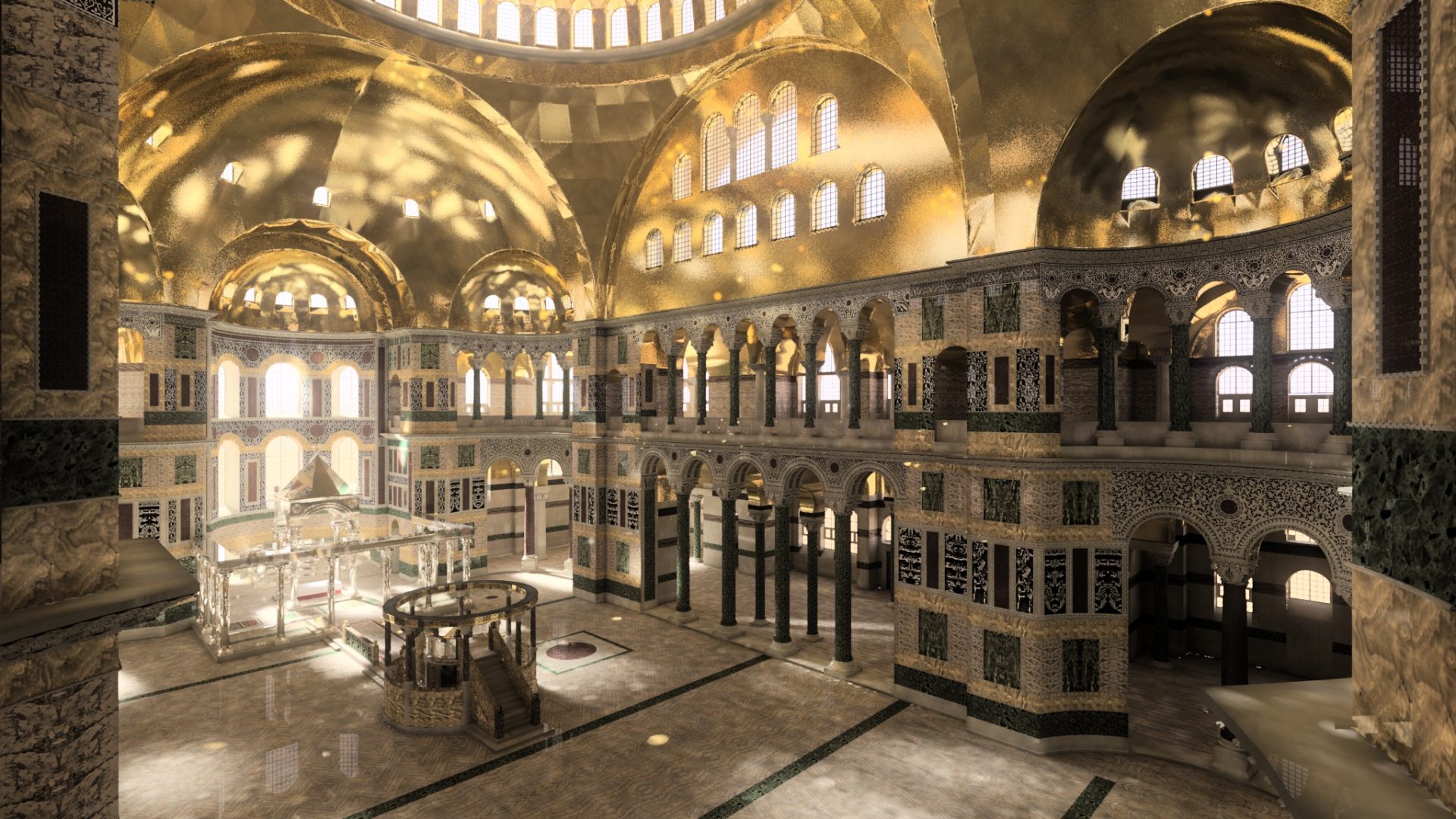
Daylight scattering by Roman window glass and its effect on the il- lumination of building interiors are assessed. The scattering properties of exemplary finds are characterized by gonio-photometric measurements and analyzed with regard to surface structure, inclusions and aging effects. The measurement data is compiled into data-driven models of the optical properties of each sample, predicting the distribution of transmitted light for arbitrary incident directions. One model is chosen and applied with a detailed reconstruction model of Hagia Sophia in …

Modeling Roman window glass Read More

Visitors from the Solar Research Institute of Singapore

Dr Yan Wang and Dr Yong Sheng Khoo from the Solar Enery Research Institute of Singapore (SERIS) were visiting the optical lab at CC Building Skin on 23. March. Dr Wang and Dr Khoo develop photovoltaic modules optimized for applications in the dense urban context of Singapore. They brought a first set of samples that were optically characterized on the goniophotometer. We hope for an extended research and development collaboration in the future.

Visitors from the Solar Research Institute of Singapore Read More

Spectrally resolved BSDF measurement in low signal-range

  While most gonio-photometric measurements at CC Building Skin cover wide spectral ranges such as visible or near-infrared light, some applications require a spectrally resolved measurement of light scattering. The combination of optical filters in the light path allows to select lower and upper boundaries of the effective wavelength band in the measurement according to the characteristic of the sample, and the required resolution. Since the detector only receives the fraction of incident power that is within a given, narrowed …

Spectrally resolved BSDF measurement in low signal-range Read More

Articel on BSDF measurement and modeling of a retro-reflective coating for daylighting

The optical characterization and the data-driven modeling of a retro-reflective coating are described in the article “Characterization and data-driven modeling of a retro-reflective coating in Radiance”:   A novel extension to a scanning gonio-photometer allows to measure retro-reflection at high directional resolution. The measurements confirm highly directional retro-reflection achieved by a coating for applications in Venetian blinds. The data-driven reflection model in Radiance replicates the optical characteristics of the coating based on the measurements. Simulations illustrate the potential of the …

Articel on BSDF measurement and modeling of a retro-reflective coating for daylighting Read More

BIMSOL007 BSDF model: Siteco Combisol

[latexpage] Radiance BSDF model Array of hexagonal, bent light shafts. The system is measured and modeled without enclosing glass panes. The intended North direction (max. transmission) corresponds to $\phi_i=90$ deg. due to size constraints of the sample. Downloads: Near Infrared: Tensor-tree ($2^7 \cdot 2^7$ in, $2^7  \cdot 2^7$ out, 95% data-reduction) Klems basis ($145$ in, $145$ out) Visible light: Tensor-tree ($2^7 \cdot 2^7$ in, $2^7  \cdot 2^7$ out, 95% data-reduction) Klems basis ($145$ in, $145$ out)

BIMSOL007 BSDF model: Siteco Combisol Read More